Best 4X4 Truck: How to Choose One for Your Needs
Choosing the best 4x4 truck is less about finding the biggest number on a spec sheet and more about matching the truck to the places you drive and the work you do. For shoppers in Fredericksburg and nearby Spotsylvania, Stafford, Culpeper, Woodbridge, and King George, the right choice should handle your regular routine without adding capability you will rarely use.
Start with your typical roads, passengers, cargo, and budget. Then compare the specific truck’s four-wheel-drive system, cab, bed, condition, and total ownership costs. A clear checklist makes it easier to shop with confidence, whether you need a work truck or a versatile vehicle for weekends.
What makes a 4x4 truck the right choice?
A 4x4 truck can send power to all four wheels when the driver selects the appropriate mode. That can help maintain traction on loose, slippery, or uneven surfaces. It does not make a truck immune to poor conditions, and it does not replace good tires, careful driving, or sound judgment.
Think about the conditions you face often, not just the rare situation you might encounter. A 4x4 may make sense if you regularly travel on unpaved roads, visit work sites, or need added traction in challenging weather. If most driving is on paved roads, a two-wheel-drive truck may meet your needs while avoiding some added weight and mechanical complexity associated with four-wheel drive.
- Regular route: Note whether you drive paved roads, gravel, steep driveways, or rough work areas.
- Typical load: Consider passengers, tools, equipment, and recreational gear.
- Occasional needs: Separate a genuine recurring need from a feature you might use once.
- Driving habits: Be realistic about whether you are comfortable selecting modes and adapting speed to conditions.
Four-wheel drive helps with traction, but it does not automatically improve stopping distance or cornering. Leave room, slow down when conditions call for it, and use the system as described in the owner’s manual.
How should you compare 4x4 systems?
Not every 4x4 setup works in exactly the same way. Some trucks offer selectable modes, such as two-wheel drive, four-wheel drive high, and four-wheel drive low. Others may provide automatic or terrain-focused settings. Labels and operating rules vary by model, so check the specific vehicle’s manual rather than assuming controls work alike across brands.
Four-wheel drive high is generally intended for situations where added traction is useful at normal road speeds, while low range is designed for slow travel over challenging terrain. This is a broad description, not permission to use either mode on any surface. Follow the vehicle maker’s instructions about speed, surface, and when to shift modes. Some systems should not be used on dry pavement because driveline binding can occur.
| Option or feature | What to check | Questions for your use |
|---|---|---|
| Two-wheel drive | Whether it meets your everyday route and workload | Will most of my driving be on paved roads? |
| Selectable 4x4 high | How the system engages and which surfaces are appropriate | Do I often face slippery or loose surfaces? |
| 4x4 low range | Operating steps, speed limits, and intended conditions in the manual | Do I need controlled, slow-speed capability? |
| Additional drive modes | What each setting changes and whether the truck has the equipment fitted | Will these settings help with my actual routes? |
Do not judge a system by its name alone. Ask for the owner’s manual or consult the manufacturer’s guidance for that exact year and configuration. A test drive can help you understand ordinary road manners, but it is not a reason to test traction limits or engage a mode on an unsuitable surface.
Which cab and bed fit your everyday life?
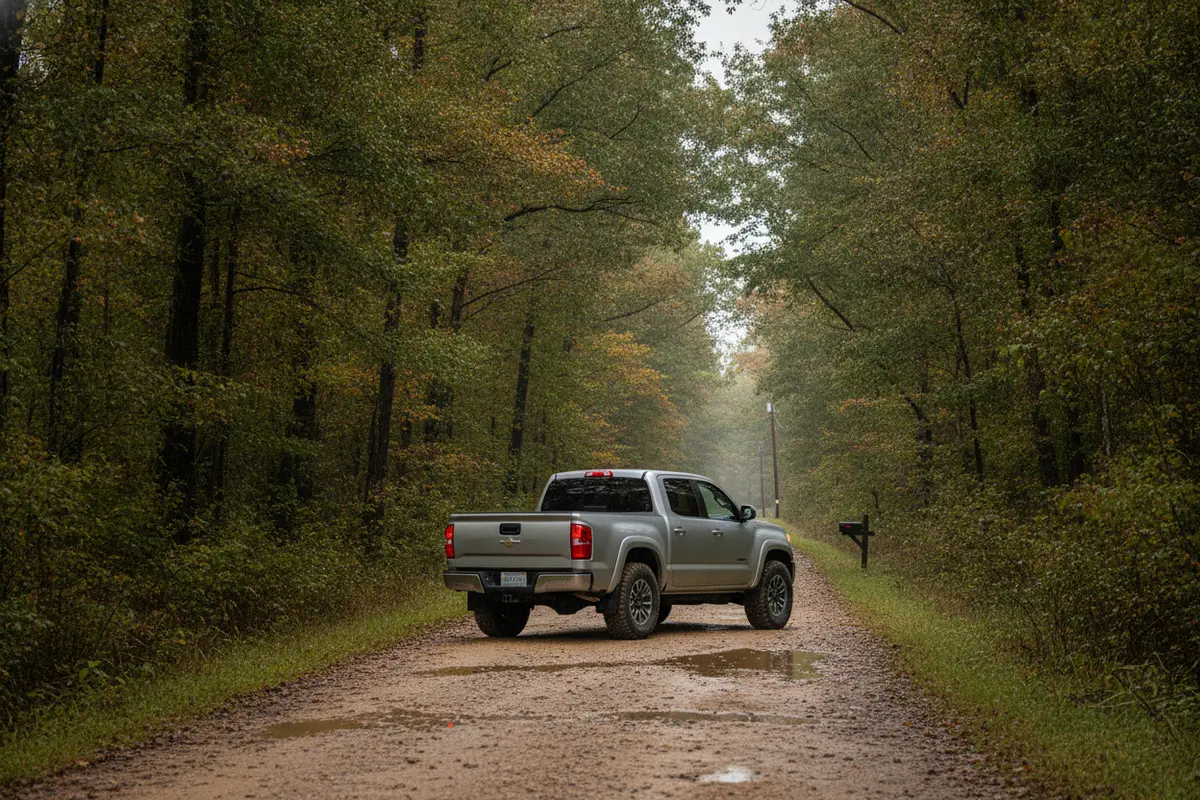
Capability is only part of choosing a truck. The cab and bed determine how well it fits your family, passengers, equipment, and parking situation. Compare the layout of the exact truck rather than relying on a trim name, since configurations differ.
Cab space and passenger needs
If you regularly carry adults or children, sit in the front and rear seats. Check entry, headroom, legroom, seat-belt access, and the ease of fitting any child seats you use. A larger cab can offer everyday flexibility, but it may reduce bed length or affect the truck’s overall size.
For a work-focused truck that usually carries one or two people, a smaller cab may be enough. If family trips, carpools, or friends riding along are part of the plan, prioritize the seating layout and comfort. Bring the items you expect to use when evaluating cabin space. Try getting into the rear seat with a bag or child seat in hand, since that reveals practical access issues that a photo cannot show.
Bed length and cargo shape
Measure the objects you carry most often, including their length and height. Consider whether they need to lie flat, stay covered, or be secured. A longer bed can be useful for bulky materials, while a shorter bed can be easier to maneuver and park. The best balance depends on the truck’s configuration and your daily tasks.
Check the bed’s condition and the type of tie-down points or accessories included. Verify any cargo limits from manufacturer information for the specific vehicle. Never assume four-wheel drive means the truck can carry or tow more; these are separate limits that depend on the vehicle’s equipment and specifications.
Make a short cargo list before visiting a truck. For example, a homeowner who often carries long boards needs to think about securement and whether the load can extend safely, while someone carrying tool cases may care more about a lockable cover and easy access. Ask the seller to confirm the exact bed dimensions and equipment, then compare those details with your list.
How do you choose the best 4x4 truck for your budget?
Compare the full cost of owning a truck, not only its listed price or monthly payment. A larger or more specialized vehicle may cost more to fuel, insure, maintain, or equip. Your actual costs depend on the vehicle, how you drive, local rates, and the coverage you choose, so gather real estimates before deciding.
- Purchase amount: Compare the listed price and ask for a written breakdown of charges before agreeing.
- Financing: Review the annual percentage rate, term, down payment, and total payments, not just the monthly figure.
- Fuel: Check the truck’s fuel economy information and estimate fuel needs from your own mileage.
- Insurance: Request a quote for the exact model and configuration before purchase.
- Maintenance and repairs: Consider tire replacement and routine service alongside possible repair needs.
- Equipment: Include any bed cover, hitch, or accessories you need, and confirm what is included.
Set a comfortable total budget before comparing trucks. A low payment can result from a longer loan term, which may mean paying more over time. Compare the same down payment and term when reviewing financing choices, and make sure the complete amount fits your household budget.
Auto Fanatics offers Capital One pre-qualification, which the dealership describes as having no credit impact. Pre-qualification is not the same as final loan approval or a guarantee of a particular rate. Review the terms presented for your situation and compare total cost before making a decision.
A simple monthly estimate can expose tradeoffs early. Suppose two trucks have similar quoted prices, but one needs tires sooner and the other has accessories you would otherwise buy. List the purchase quote, financing estimate, insurance quote, fuel estimate, and immediate equipment costs in separate rows. Use your own expected mileage and quotes rather than a generic ownership-cost estimate.
What should you check when shopping for a used 4x4?
First confirm that the truck’s advertised configuration matches your needs. Check the year, make, model, cab, bed, drive system, and equipment. Ask which four-wheel-drive features are fitted and how to operate them. A listing description may not answer every question, so verify details on the specific vehicle.
During an in-person visit, look over the exterior, cabin, tires, and visible components. Check that controls and display indicators behave as described in the vehicle manual. Ask what information is available about the truck’s condition and service history, and review any documents provided. Do not assume every vehicle has a particular inspection or history report unless it is confirmed.
- Confirm the truck has the four-wheel-drive system you expect.
- Ask to see how the relevant controls operate, using the manufacturer’s instructions.
- Check for warning lights and ask about any that appear.
- Inspect tire condition and look for differences in tire type or wear.
- Review the cab and bed for wear that reflects how the vehicle may have been used.
- Ask about price, fees, financing terms, and optional products in writing.
- Take a normal, safe test drive and note how the truck feels under ordinary conditions.
If you want an independent assessment, arrange one with a qualified mechanic before purchase. Clarify what the assessment covers and how to coordinate it. No single check can predict every future repair, so use available information to make a considered decision.
When comparing trucks, keep your notes consistent. Record the same details for each candidate: price, mileage, cab and bed, drive system, known equipment, condition observations, financing estimate, and open questions. This prevents a striking feature or a low advertised figure from overshadowing the factors that matter most to you.
Use a repeatable visit checklist
Before you leave home, save the listing and write down what you still need to verify. At the lot, walk around the truck in daylight if possible. Look for differences in paint appearance, body-panel alignment, glass condition, and tire wear, then ask about anything you do not understand rather than guessing at its cause.
Inside, try every seat and inspect the controls you expect to use. Confirm that the four-wheel-drive selector and related indicators match the manual’s description. During a routine drive, pay attention to visibility, braking feel, steering response, shifting, and unusual sounds. Keep the drive within normal road conditions; do not attempt to provoke wheel slip or test a low-range mode on public roads.
Afterward, write down observations separately from confirmed facts. “Tire wear looks uneven” is an observation; the reason for it needs professional evaluation. “Seller provided service receipts” is a verifiable note; it does not prove that every service was completed or predict future condition. This distinction helps you ask precise follow-up questions.
How can Fredericksburg-area shoppers narrow the search?
Start with your local routine. A commute that uses I-95 and town roads may call for a different balance than frequent trips to rural properties or job sites. Consider parking, passenger needs, and the types of cargo you carry around Fredericksburg, Spotsylvania, Stafford, Culpeper, Woodbridge, and King George.
Then filter inventory by body style and requirements you can verify. Auto Fanatics lists pickup trucks for sale and also has a page for used trucks. Inventory changes, so confirm a vehicle’s current availability and exact configuration directly in its listing or with the dealership.
If a pickup does not fit your daily needs, compare other body styles before settling on one. You can also review used SUVs, cars and sedans, or passenger vans and minivans. Thinking beyond one category can help you avoid paying for a truck bed or capability you will seldom use.
Auto Fanatics serves Fredericksburg and surrounding communities, and the company reports more than 500 five-star reviews. Read the customer testimonials as one source of information about other shoppers’ experiences, then judge the specific vehicle and terms on their own merits.
Use local travel as a practical test of fit without trying to recreate every possible condition. If you park in a tight space near home or work, consider the truck’s length and turning room. If the route includes a long I-95 commute, think about seat comfort, cabin noise, visibility, and how easily the vehicle fits your normal schedule. These everyday factors can matter more than a rarely used feature.
How do you make a fair comparison between two trucks?
Put the two options side by side using the same criteria. Do not compare one truck’s monthly payment with another’s listed price or assume similar model names mean similar equipment. Record the differences, then decide which ones matter enough to affect your choice.
| Comparison point | Truck A | Truck B |
|---|---|---|
| Price and written fees | Record the quoted amounts | Record the quoted amounts |
| Cab, bed, and seating | Note layout and fit for your needs | Note layout and fit for your needs |
| 4x4 equipment and instructions | Confirm the system and operating guidance | Confirm the system and operating guidance |
| Condition and available records | List observed details and documents | List observed details and documents |
| Estimated ownership costs | Use your fuel, insurance, and financing estimates | Use your fuel, insurance, and financing estimates |
Use the same assumptions for both financing estimates. Ask for details in writing, including the amount financed, rate, term, and total payments. For general vehicle-safety information, consult the National Highway Traffic Safety Administration. Its resources can inform your research, but they do not replace evaluating a particular used vehicle.
For a worked comparison, imagine Truck A has a larger cab and shorter bed, while Truck B has more bed space and a smaller rear seat. If you carry family members most days, seating may deserve more weight than occasional material hauling. If work cargo is the weekly priority and passengers are rare, the reverse may be true. Add actual quotes and verified configuration details to the table; do not let a broad label decide the comparison for you.
Once you have a short list, revisit your original priorities. If you need passenger space every day, do not trade it away for a feature you may rarely use. If your work requires a specific bed size or equipment, verify the exact truck meets the need rather than relying on a broad model description.
What questions should you ask before choosing?
Good questions uncover details that a listing may not include. Ask them in a consistent order for every truck, and take notes so you can compare answers later.
- What exact four-wheel-drive system and modes are on this vehicle?
- Where can I review instructions for operating those modes?
- What documents about condition or service are available for this specific truck?
- Which equipment and accessories are included in the quoted price?
- What charges, optional products, and financing terms appear in the written offer?
- Can I arrange an independent mechanical assessment before purchase?
- Is this exact vehicle currently available, and can I confirm its configuration in person?
Notice whether an answer is confirmed, estimated, or still unknown. A helpful shopper’s worksheet can use three columns: question, answer or document, and follow-up needed. For instance, if towing capability matters, do not rely on a general model description. Ask for the exact configuration and verify the applicable rating from manufacturer information.
This process also makes it easier to pause when something is unclear. You do not need to resolve every question during the first visit, and a careful comparison is more useful than a rushed decision based on one attractive feature.
Frequently asked questions
Does 4x4 mean a truck is safe in every kind of weather?
No. Four-wheel drive can help with traction in some conditions, but it does not eliminate the risks of slick roads or improve every part of vehicle handling. Tires, speed, visibility, stopping distance, and driver decisions still matter. Follow the vehicle manual and adjust to road conditions.
Should I choose a larger truck for more capability?
Only if its size and equipment serve a real need. Larger trucks can be harder to park and may have different fuel, tire, and ownership costs. Match the truck to your typical cargo, passengers, roads, and budget, then verify its specific ratings and equipment.
Can I use four-wheel drive on dry pavement?
That depends on the system. Some four-wheel-drive modes are not intended for dry pavement, while other systems operate differently. Read the owner’s manual for the exact truck and follow its directions for each mode.
What is the most important thing to compare in used 4x4 trucks?
There is no single answer for every shopper. Confirm the configuration first, then compare condition, documented information, cab and bed fit, written price, financing, and expected ownership costs. The best option is the one that meets your priorities with terms you understand.
Where can I compare trucks near Fredericksburg, Virginia?
Review the current Fredericksburg-area vehicle inventory and verify each listing’s configuration and availability. Auto Fanatics is located in Fredericksburg and serves shoppers in surrounding Northern Virginia communities.
Take your time, ask direct questions, and compare the complete vehicle and purchase terms. A careful match between your everyday needs and the truck’s verified features is a stronger choice than buying capability on the assumption that more is always better.