Chevrolet Silverado Financing: Compare Used-Truck Payment Options
Chevrolet Silverado financing is easier to compare when you look beyond the monthly payment. Your down payment, loan term, credit profile, trade-in value, and the truck’s full ownership costs all affect the decision. If you are shopping around Fredericksburg, start by deciding what a comfortable total budget looks like before choosing a specific payment.
Browse used vehicles and compare available trucks
What Goes Into Chevrolet Silverado Financing?
A vehicle loan turns the amount you finance into scheduled payments over an agreed period. The final terms depend on the lender’s review and the details of your application and selected vehicle. No one should treat an estimated payment or an initial pre-qualification as a promise of a specific rate or approval.
Start with the amount financed. It is generally based on the negotiated vehicle price plus applicable taxes and fees, less your down payment and any trade-in equity applied to the purchase. A lender may also consider other details in the transaction. Ask for an itemized breakdown so you can see what is included rather than judging the deal by one number.
Your payment is shaped by the amount financed, the annual percentage rate (APR), and the loan term. A larger amount financed, higher APR, or shorter term can increase the scheduled payment. A longer term can lower the payment by spreading repayment over more months, but it can also mean paying interest for longer. Compare both the payment and the total amount you expect to pay over the loan.
Use a consistent vehicle price and down payment when comparing offers. If one quote includes different fees, add-ons, or trade-in assumptions, the payment comparison may not be useful. Ask which items are optional, which are required, and whether the quoted figures are estimates or final terms.
It helps to separate the parts of the transaction on paper. Write down the vehicle price, taxes and fees, cash down, trade-in value, payoff on the trade, amount financed, APR, number of payments, and total of payments. This gives you a simple way to notice when a payment changes because the term changed, rather than because the price or amount financed changed.
For example, imagine two estimates for the same truck. One has a lower payment because repayment is spread across more months, while the other has a higher payment over a shorter period. The first may be easier to fit into a monthly budget, but compare the total scheduled payments and how long you will remain responsible for the loan. Do not decide from the payment alone.
When checking a listing, separate the Silverado’s equipment and condition from the financing decision. A particular cab, bed, drivetrain, or feature set may be important to your use, but none of those details alone determines your final financing terms. Inventory and vehicle details change, so confirm the exact truck and figures being used in any estimate.
How Should You Compare Loan Terms and Payments?
There is no single loan term that works for every buyer. A shorter term usually means fewer payments and less time carrying the loan, but the required monthly payment may be higher. A longer term may make a truck fit a monthly budget more easily, yet it can increase the total interest paid if the rate and amount financed stay the same.
Consider the table below as a comparison framework, not an offer. The right choice depends on the actual APR, loan amount, lender conditions, and your budget. Request figures based on the same vehicle and the same amount down before you compare.
| Option to compare | What may change | Questions to ask |
|---|---|---|
| Shorter loan term | Higher scheduled payment may be required; repayment finishes sooner. | Can I make this payment comfortably while keeping room for other expenses? |
| Longer loan term | Payment may be lower, while interest may accrue over more time. | What is the total of scheduled payments, and how long will I owe on the truck? |
| More money down | Less may need to be financed, depending on the deal structure. | After the down payment, will I still have savings for routine and unexpected costs? |
| Trade-in applied | Positive equity may reduce the amount financed; a payoff balance can affect the calculation. | What value is assigned to my vehicle, and how is any existing loan handled? |
Compare the APR, not just a quoted interest rate, when reviewing loan disclosures. APR is intended to express the cost of credit in a standardized annual measure, though the exact items reflected should be confirmed in the documents. Also review the number of payments, payment due dates, any permitted early-payoff conditions, and the total of payments disclosed by the lender. For general consumer guidance on borrowing and financial products, consult the Consumer Financial Protection Bureau.
Before you visit, you can compare used pickup trucks in Fredericksburg and note the Silverado listings that fit your needs. Availability can change, so confirm the exact vehicle, price, equipment, and current terms before making a decision.
Make a comparison sheet for every estimate you receive. Include whether the estimate assumes a trade, whether taxes and fees are included, the amount down, APR, term, payment frequency, and total of payments. If a figure is not available yet, mark it as unknown instead of treating it as zero. That keeps an early estimate from looking more complete than it is.
Also ask how a payment is calculated if the lender or dealership provides a range. A range can help with early planning, but the final vehicle, verified application information, and lender decision may change the details. Ask for updated written figures when an assumption changes, such as adding a trade-in or choosing a different truck.
How Do Down Payment and Trade-In Equity Affect the Loan?
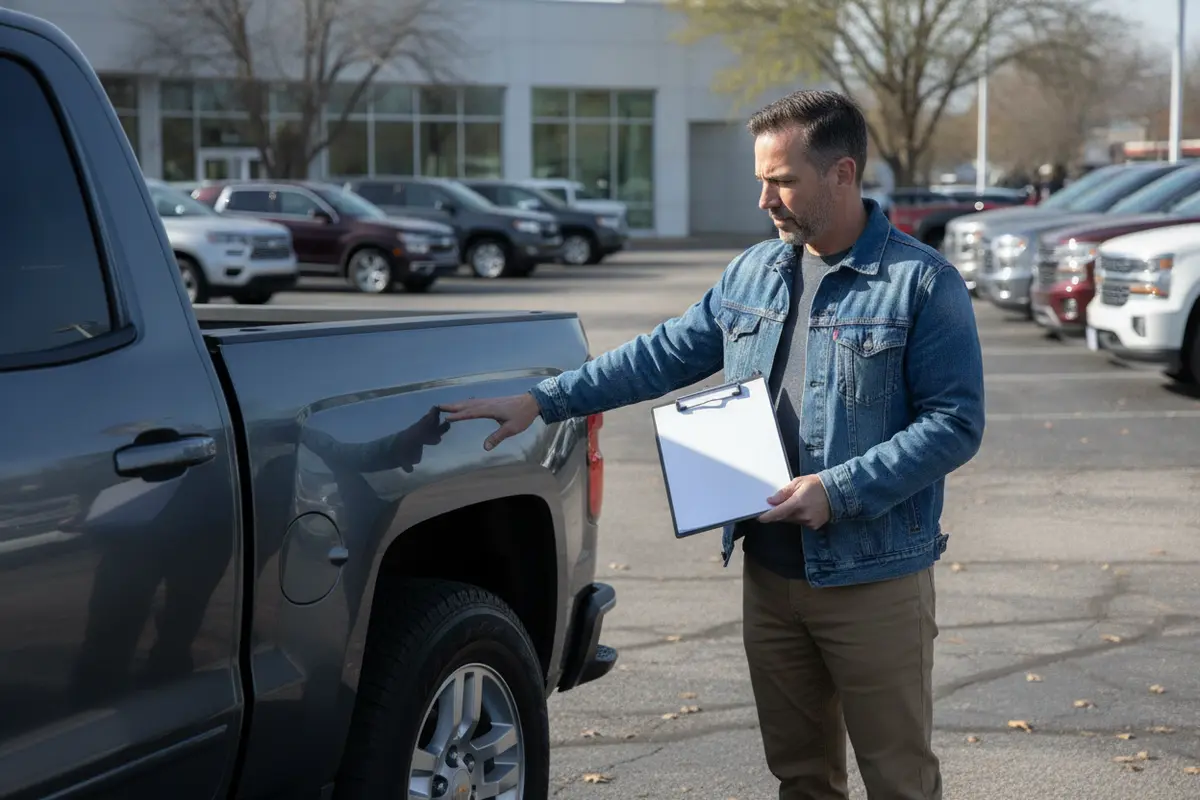
A down payment is money you contribute at purchase rather than borrowing. If the rest of the deal stays the same, putting more down reduces the amount you need to finance. But a larger down payment is not automatically the best choice if it leaves too little cash for insurance, registration, fuel, maintenance, or emergencies.
Set a cash limit before shopping. Keep funds aside for costs that arise after you take the truck home, and do not base the entire decision on reaching a particular payment. If you have a trade-in, its value may help reduce the amount financed, but any remaining payoff on that vehicle must be considered as part of the transaction.
Ask for a clear trade-in calculation. You can request the proposed trade value, the outstanding payoff used in the estimate, and how the resulting equity or balance changes the purchase figures. A trade-in with positive equity may provide money toward the next vehicle. If the payoff is higher than the trade value, ask how that difference would be handled and what it would mean for the new loan. Do not assume the difference disappears.
Auto Fanatics offers trade-in services, and shoppers can review the used-car inventory while considering whether to trade or sell a current vehicle separately. Compare the written figures and timing for each route. The best choice depends on the actual offer, any loan payoff, convenience, and your overall budget.
Here is a practical way to review your trade. First, ask for the current payoff amount from your existing lender, since a payoff quote may differ from the balance you remember. Then ask how the trade value is determined for the proposed transaction and request that value as its own line. Finally, compare the payoff and trade value to understand whether the trade contributes equity or leaves a shortfall to address.
Consider a simple hypothetical example without assuming a particular truck price. If a trade is worth more than its payoff, the difference may be available to apply toward the next purchase, subject to the transaction terms. If the payoff is higher than the trade value, that gap remains part of the financial picture. Ask how it is handled and how it affects the new amount financed before deciding.
Cash down and trade equity are not interchangeable for every buyer. A trade can reduce what you need to bring from savings, but its value and payoff must be documented. A cash down payment is easier to plan as a set amount, but spending too much may leave you without a reserve. Compare the effect of each option against the same truck and term.
What Should You Know About Credit and Pre-Qualification?
Your credit profile can influence which financing options a lender may consider and what terms it offers. Lenders may review credit history along with information in your application and other parts of the transaction. The outcome varies by lender and applicant, so avoid relying on a specific rate or approval before the lender completes its review.
Auto Fanatics works with financing options for a range of credit situations. That is not a guarantee that every application will be approved or receive a particular term. If you have limited credit history, past credit challenges, or strong credit, ask what information is needed and what options may be available for the vehicle you are considering.
Pre-qualification can help you explore a possible financing range before selecting a truck. Auto Fanatics provides Capital One pre-qualification with no credit impact, according to the dealership’s stated program. Pre-qualification is not a final loan approval, and final terms may depend on the lender’s review, the selected vehicle, and verified application details. Read the provider’s disclosures and ask whether any later step involves a credit inquiry.
Think of pre-qualification as a planning input, not a shopping limit or a promise. It may help you narrow the range of vehicles worth considering, but the terms can depend on the exact truck and final review. If your preferred Silverado is outside the early estimate, ask what factors the lender will evaluate and whether a different vehicle, down payment, or loan structure can be considered. Do not assume any adjustment will guarantee approval.
You can review the dealership’s online financing information and application route through available dealership resources. Provide accurate information and use a secure connection when submitting personal details. If you are comparing offers, write down the lender, APR, term, amount financed, and any conditions so that you can assess them on equal terms.
It may help to gather basic information in advance, such as proof of identity, income details, residence history, and information about a trade-in or current vehicle loan. A lender or dealership can tell you what documents apply to your situation. Do not send sensitive information through an unverified link, and ask how your information will be used if anything is unclear.
Before submitting an application, take a moment to check the details you entered. Confirm that contact information is current and that income, residence, and vehicle information are accurate to the best of your knowledge. If something is uncertain, ask the lender or dealership how to report it rather than guessing. Accurate information helps the lender evaluate the application based on the facts provided.
If you are considering more than one offer, compare the written disclosures and ask whether the terms are conditional on a specific vehicle, down payment, or other information. Keep notes about who provided each estimate and when it was prepared. That makes it easier to revisit the options without relying on memory, especially when different offers have similar payments but different terms.
How Can You Estimate the Full Cost of Owning a Silverado?
The loan payment is only one part of the truck budget. Before choosing a vehicle, make room for insurance, fuel, registration, routine maintenance, and repairs. A pickup’s equipment, age, condition, driving needs, and local insurance quote can all affect what ownership costs you. Get insurance estimates for the specific vehicle when possible rather than assuming all trucks cost the same to insure.
Think about how you will use the Silverado. A truck that fits daily commuting on I-95 may also need to meet weekend, family, or work needs. Compare cab and bed configurations, passenger space, parking fit, and the features you will actually use. Choose a vehicle based on its condition and suitability, not only on a payment that appears manageable.
Make a simple monthly plan with the payment estimate plus your expected insurance, fuel, and maintenance allowance. Then test the plan against a higher-than-expected expense. If the budget only works when every estimate is at its lowest, consider a different price point, more time to save, or another vehicle configuration.
A useful budget exercise has three parts. List fixed costs you can estimate now, such as the loan payment and an insurance quote. Add variable costs, such as fuel, which depend on how often and how far you drive. Then set aside an amount for maintenance and unexpected repairs based on your own budget and vehicle research. Do not treat an estimate as a guarantee of future expense.
For a buyer commuting from Stafford or Spotsylvania, the truck may spend much of the week in traffic and then serve other needs on weekends. A buyer traveling farther from Culpeper, Woodbridge, or King George may place a different value on cabin comfort, storage, or driving range. Write down how you expect to use the vehicle during a normal week, then compare listings against those needs instead of paying for equipment you may not use.
Review the purchase paperwork carefully before signing. Confirm the vehicle price, down payment, trade-in figures, taxes and fees, optional products, APR, term, payment amount, and total of payments. Ask for an explanation of anything you do not understand. Auto Fanatics emphasizes upfront pricing and a no-pressure buying experience, and its customer testimonials offer additional context about shoppers’ experiences.
Separate required costs from optional products in the paperwork. If an item is unfamiliar, ask what it covers, how much it costs, whether it is optional, and how accepting it changes the amount financed or payment. Take time to review the final contract before signing. A clear answer should let you understand both the cost and the terms, not just the new monthly figure.
How Can Fredericksburg-Area Buyers Prepare?
Planning ahead can make it easier to compare financing choices without rushing. Buyers coming from Spotsylvania, Stafford, Culpeper, Woodbridge, or King George can use the same steps: set a total budget, identify suitable trucks, explore financing, and review the actual written terms before deciding.
- Set a budget range. Decide what payment and total purchase cost fit your household after accounting for other vehicle expenses. Keep the monthly amount realistic, but include the total cost over the full loan term.
- Choose useful truck features. List the cab, bed, towing, passenger, and technology needs that matter to you, then separate must-haves from preferences. Use the list to compare the available trucks rather than selecting by a payment estimate alone.
- Explore possible financing. Review pre-qualification or application options, but treat early estimates as preliminary rather than a promise. Ask what information is still needed for a lender to review the application.
- Plan for cash and trade value. Decide how much you could put down without using every available reserve, and gather the payoff details for any trade-in. Ask that any trade value and payoff appear separately in the purchase figures.
- Compare like with like. Request figures for the same truck and purchase assumptions, then compare APR, term, payment, and total payments. If the truck or amount down changes, request a new comparison.
- Read the final documents. Verify all costs and terms in writing, and ask questions before you agree. Make sure the paperwork matches the figures you reviewed.
You can prepare a short list of questions to take with you: What is the amount financed? What assumptions are included in this payment? What are the APR and term? What is the total of payments? How are fees and optional products listed? How does a trade payoff change the figures? Having the questions in front of you can keep the conversation focused and make it easier to compare answers afterward.
For an online starting point, browse the used pickup truck listings and compare the current selection. You can also review the Chevrolet inventory for available vehicles from the brand. These pages show inventory that may change; verify the specific vehicle and its details before planning around it.
If you are arranging a visit from farther away, confirm the truck is still available and ask what information would be helpful to bring. Use the dealership’s location information to plan a visit. The same preparation applies whether you arrive from Fredericksburg or another nearby community: compare the same figures and take time to understand the final paperwork.
Auto Fanatics is based in Fredericksburg and serves nearby Northern Virginia communities. Its 500+ five-star reviews reflect a substantial history of customer feedback, but your own decision should rest on the vehicle, the written financing terms, and whether the total cost fits your needs.
Before settling on a choice, revisit your budget using the actual truck and written figures. Check that the payment leaves room for insurance and operating costs, that the term suits your plans, and that any down payment still leaves an appropriate cash reserve. If something does not fit, ask about another vehicle or structure and compare the new figures carefully.
Compare available used trucks and find a Silverado to consider
Frequently Asked Questions
Can I get Chevrolet Silverado financing with challenged or limited credit?
Financing options may be available for people with different credit histories, but approval and terms depend on the lender’s review and the details of the application and vehicle. Auto Fanatics works with financing solutions for a range of credit situations. Explore pre-qualification or apply to learn what may be available, and do not treat an estimate as guaranteed approval.
Does a Capital One pre-qualification guarantee my loan terms?
No. Auto Fanatics states that its Capital One pre-qualification does not affect credit, but pre-qualification is not final approval or a guarantee of a rate, payment, or term. Confirm the current program details and review the lender’s disclosures before proceeding.
Should I choose a longer term to lower my Silverado payment?
A longer term may lower the scheduled payment by spreading repayment over more months, but it may increase the total interest paid. Compare the full amount of payments, APR, and how long you will owe, then choose a term that fits your budget without overlooking the total cost.
Can a trade-in reduce the amount I finance?
It may. The effect depends on the value assigned to the trade and any payoff balance on it. Ask for the trade value, payoff, and resulting amount financed as separate written figures so you can understand how they affect the purchase.
What should I compare besides the monthly payment?
Compare the vehicle price, down payment, trade figures, fees, APR, term, total of payments, and estimated ownership costs such as insurance and fuel. Make sure the offers use the same assumptions and ask questions about any optional products or conditions before signing.
Taking time to compare the vehicle and the full financing terms can help you choose a Silverado that fits both your driving needs and your budget.