Chevrolet Silverado Reliability: Best Years and Inspection Checks
Chevrolet Silverado reliability is not the same for every truck wearing the name. Model year, engine and drivetrain, maintenance, past work, and current condition all matter, so a dependable choice starts with researching the specific truck in front of you rather than relying on a broad reputation.
This guide explains how to compare model years, review service history, assess common wear areas, and decide when to ask an independent professional to inspect a truck. If you are shopping in Fredericksburg or nearby Spotsylvania, Stafford, Culpeper, Woodbridge, or King George, these steps can help make your next questions more focused.
Browse used vehicles in Fredericksburg
What does Chevrolet Silverado reliability depend on?
A truck's reliability is the result of its individual history and present condition, not a guarantee attached to a badge. Two Silverados of the same year can have very different lives. One may have been used for light commuting and serviced on schedule. Another may have spent years towing, carrying heavy loads, or working on rough roads.
Start with four connected factors: the exact model year and configuration, how the truck was maintained, how it was used, and what a careful inspection finds today. The goal is not to predict that a vehicle will never need repairs. It is to understand its known condition, likely needs, and fit for your plans before you agree to buy.
- Year and configuration: Confirm the model year, engine, cab, bed, and drivetrain on the specific truck. Do not assume that every version of a Silverado has identical parts or driving characteristics.
- Maintenance: Look for consistent documentation, not just a recent service receipt. A pattern of routine care is more informative than a single entry.
- Use: Ask whether it was used for commuting, towing, hauling, off-road driving, or a mix. These uses can create different wear patterns.
- Condition: Check how the truck behaves on a drive and inspect visible components. Have a qualified mechanic review concerns that need a closer look.
It also helps to compare the truck with others in the same class and budget. Auto Fanatics' used truck inventory in Fredericksburg is one place to see what pickup options are available locally. A comparison is most useful when you look beyond the asking price and note each vehicle's equipment, mileage, history, and condition.
How should you research Silverado model years?
Begin with the year of the specific truck, then identify its engine and drivetrain. Search for information tied to that exact combination, and distinguish between documented recalls, service bulletins, owner reports, and general commentary. They are not interchangeable. A recall is a formal safety action; an online anecdote does not establish that every truck has the same fault.
Use vehicle-specific sources when possible. Check whether the truck has an open recall by entering its identification details on the National Highway Traffic Safety Administration website. Confirm the result with the seller or an authorized repair facility, because a recall lookup is a research step rather than a full mechanical assessment. A recall history alone cannot tell you the vehicle's overall condition.
Next, compare the model year with the exact engine, transmission, and drivetrain listed on the truck's records and vehicle information. Make a short note of any concerns you find and turn them into questions for the seller or mechanic. Avoid treating a single online list of “best” or “worst” years as a final answer. A well-documented truck in sound condition may be a stronger fit than a supposedly favored year with unclear history or signs of hard use.
When researching, keep a small comparison sheet. Record the source and date of each claim, and separate verified information from personal opinions. Look for repeating, credible evidence tied to the right year and configuration. If a claim cannot be traced to a reliable source, treat it as a prompt to investigate rather than a fact about the truck you are considering.
It is easy to get lost in long forum threads and lists that rank model years without explaining their method. Use those discussions to collect questions, not to decide that a particular truck is sound or unsound. Check whether a post refers to the same engine and drivetrain, whether the writer describes a confirmed repair or only a suspicion, and whether the issue is relevant to the truck's mileage and use. If sources disagree, note the difference and ask a mechanic to inspect the related component.
Also confirm the truck's identity from its vehicle information and paperwork. Trim names and equipment can vary, and a seller's description may omit details that matter to your research. Verify the stated model year, engine, and drivetrain before applying advice from another listing. If you are unsure how to interpret a vehicle record, ask the seller to clarify it or seek help from a qualified professional rather than making an assumption.
Which maintenance records should you review?
Ask for service records and arrange them in date order. Note the mileage at each visit, the work completed, and any gaps. A folder of invoices, digital service entries, or maintenance logs may help you see whether care was consistent. Missing paperwork does not by itself prove neglect, but it leaves more questions unanswered.
Look for routine maintenance entries as well as repairs. Compare dates and mileage for repeated services, and check whether the records identify the vehicle clearly. Ask about warning lights, drivability complaints, major repairs, and any work that was started but not completed. If the seller does not know an answer, record that uncertainty instead of filling in the blank with an assumption.
- Do the mileage entries move forward in a sensible order?
- Are routine services documented across the ownership period, or are there long unexplained gaps?
- Do invoices describe the parts or work, or do they only say “service performed”?
- Were there repairs to the engine, transmission, suspension, brakes, cooling system, or four-wheel-drive components?
- Are there receipts for towing equipment, suspension changes, or other modifications?
- Does the service history match the seller's account of how the vehicle was used?
Records can tell you what was reported and repaired, but they cannot replace a current inspection. A recent repair may be a positive sign when the cause and work are clear. It can also point to a concern that deserves follow-up. Ask what prompted the repair, whether it resolved the symptom, and whether any warranty or repair documentation is available.
If you are comparing a Silverado with another pickup, use the same questions for each one. Auto Fanatics' used Chevrolet listings can help you compare available Chevrolet options, while the broader used pickup inventory gives you a wider truck comparison. Listings change, so verify current equipment and vehicle details before making a trip.
What should you inspect on a used Silverado?
Inspect the truck in daylight on level ground, and take your time. Begin with a walk-around before starting the engine. Look for uneven gaps, mismatched paint, dents, corrosion, cracked lights, damaged glass, and signs that repairs may have been made. These observations do not tell the whole story, but they give you useful topics to discuss.
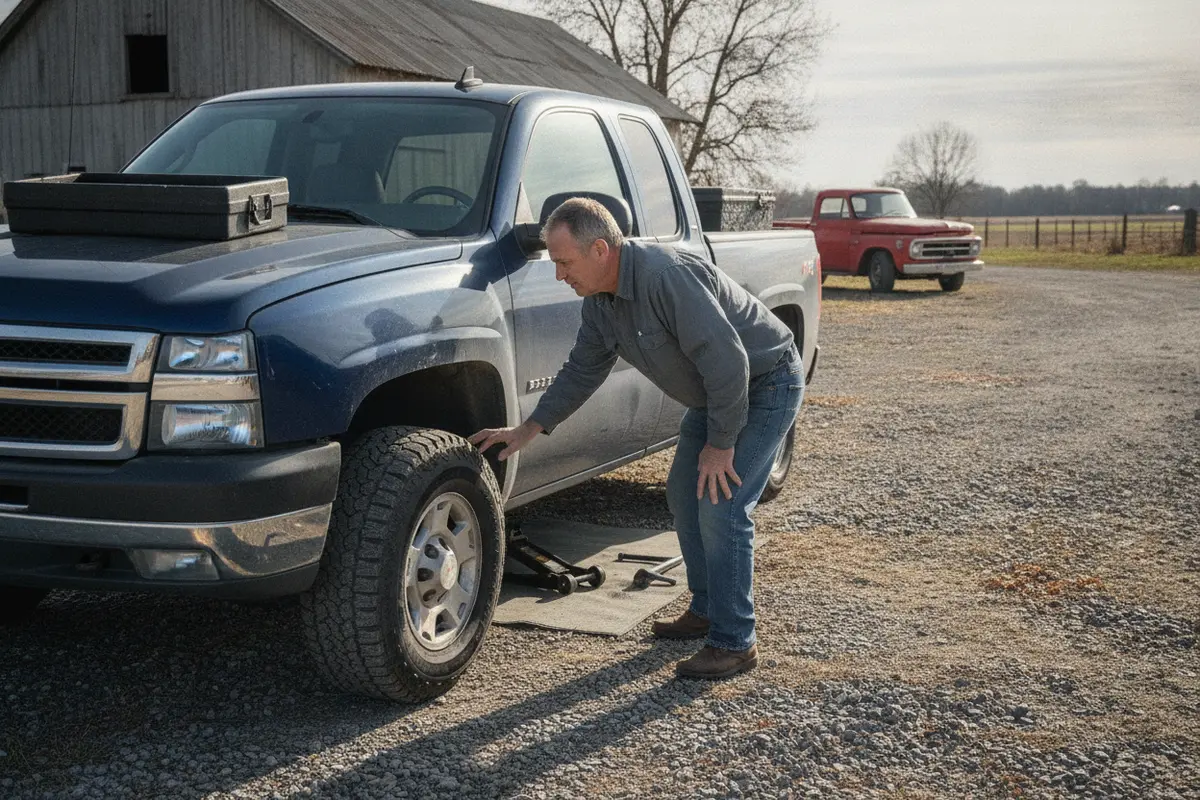
Check that the tires appear to be in suitable condition and have reasonably consistent wear across each tire. Uneven wear can have several causes, including alignment or suspension concerns, and should be evaluated rather than diagnosed by appearance alone. Look beneath the truck for visible fluid spots, damaged parts, or heavy corrosion. Do not crawl under a vehicle unless it is properly supported and safe to do so.
With the seller's permission, start the truck and notice whether warning lights appear and then go out as expected. Listen for unusual sounds and observe whether the engine idles steadily. During a legal, safe test drive, pay attention to steering response, braking, vibration, shifting, and any warning indicators. Test features such as air conditioning, windows, lights, infotainment, and four-wheel drive only when it is safe and appropriate to do so.
There are limits to what a walk-around or short drive can show. A professional inspection can evaluate areas that are difficult to judge without tools, a lift, or diagnostic equipment. Ask the mechanic to focus on the issues you noted and to explain findings in plain language. Do not assume that any vehicle has received a particular inspection unless the seller provides details you can review.
Before the appointment, share the truck's year, configuration, records, and your notes with the mechanic. Point out any sound, vibration, warning light, or behavior you noticed, and say when it happened. This gives the professional a focused starting point without asking them to confirm a diagnosis you made yourself. Ask whether the inspection includes a road test and written findings, and clarify the scope and cost of the service with the shop.
Afterward, separate findings into three groups: issues that affect safe operation, repairs or maintenance that may be needed soon, and items to monitor over time. Ask which findings are confirmed and which need further testing. Then get an estimate from a repair professional for any significant work. A written estimate helps you compare the truck fairly with other choices, but it does not obligate you to buy or require the seller to make repairs.
If an inspection identifies a serious concern, pause and consider your options. You might decide the vehicle is not a fit, request more information, or compare it with another truck. If the seller does not allow a reasonable opportunity to evaluate a vehicle, think carefully about whether you have enough information to accept that uncertainty. Your decision should reflect the evidence you have, not pressure to complete a purchase quickly.
Common areas to discuss with a mechanic
Use these as inspection prompts, not as a claim that every Silverado has a defect. Ask the mechanic to assess the engine for leaks or unusual operation; the transmission for smooth engagement and shifting; the cooling system for visible condition and operation; and the brakes, steering, suspension, tires, and underbody for wear or damage. If the truck has four-wheel drive, ask for an appropriate check of its related components.
Also discuss any signs of towing or heavy work, including equipment or modifications that may affect how the truck drives. A mechanic can help distinguish ordinary wear from an issue that needs repair. Request that any significant finding be documented, and ask what it could mean for safety, near-term maintenance, and your budget.
How do engine, drivetrain, and truck use affect your choice?
Choose a configuration that fits your real routine. A truck used mainly for commuting and occasional home projects may not need the same setup as one expected to tow regularly. Cab and bed size, two-wheel or four-wheel drive, engine, and available equipment all influence how the truck fits your needs. They can also affect purchase price, fuel use, tire costs, and maintenance considerations.
Write down your regular tasks before comparing configurations. Consider passenger space, parking, the kinds of loads you carry, and whether you travel on unpaved or slippery roads. If towing matters, identify the trailer and its loaded weight, then verify the truck's specific ratings and installed equipment using reliable documentation. Never infer towing capacity from appearance or from another Silverado's specification.
Past use matters as much as planned use. Ask if the truck regularly pulled a trailer, carried heavy cargo, spent time on rough terrain, or had modifications. Those facts do not automatically rule it out, but they help you focus inspection questions on components that may have seen greater stress. Have any aftermarket changes reviewed for suitability and quality.
Compare the cost of ownership, not only the sale price. A larger or more specialized setup could have different fuel, tire, insurance, and maintenance costs. Ask for a written breakdown of the purchase price and fees, and leave room in your budget for routine upkeep and unexpected repairs. If you are also considering an SUV for passenger space or mixed family use, browse used SUVs available in Fredericksburg as another category to compare.
How can you compare two Silverado listings fairly?
Put the details side by side and use the same standards for each truck. A lower odometer reading is not automatically a better value if the records are incomplete or the truck's condition raises questions. Likewise, higher mileage does not tell you by itself whether the vehicle was cared for. Consider the full picture and ask for evidence where you can.
| Comparison area | What to gather | How it informs your decision |
|---|---|---|
| Year and configuration | Model year, engine, drivetrain, cab, bed, and equipment | Confirms that your research applies to this exact truck and your intended use. |
| Maintenance history | Service dates, mileage, invoices, repairs, and unexplained gaps | Shows what is documented and which items need follow-up. |
| Condition | Walk-around notes, test-drive observations, and mechanic findings | Helps identify current concerns and possible repair needs. |
| Past use | Commuting, towing, hauling, off-road use, or modifications | Directs attention to areas that may have experienced additional wear. |
| Total budget | Purchase price, disclosed fees, insurance, fuel, and maintenance allowance | Lets you compare the cost of owning each option, not just its advertised price. |
| Open questions | Recall status, unclear records, warning lights, or unusual drive behavior | Creates a specific list to resolve before you decide whether to proceed. |
Keep notes specific. Instead of writing “seems good,” note what you observed, such as “service invoice at stated mileage” or “vibration during braking, mechanic to assess.” This makes it easier to compare the evidence later, especially when you visit more than one seller or travel between Fredericksburg and nearby communities along I-95.
If a seller cannot answer a question immediately, ask when the information can be confirmed. If an important concern remains unresolved, pause rather than assuming the best. A vehicle is only a good match when its condition, history, configuration, and total cost make sense for your needs.
What questions should you ask before buying?
Prepare questions in advance and ask them consistently for every truck. Clear, direct answers help you understand what is known and what still needs independent verification. You can also ask to review relevant documents rather than relying only on a verbal summary.
- How long have you had the truck, and what was its main use?
- What maintenance and repair records are available for me to review?
- Have there been any warning lights, recurring symptoms, or recent repairs?
- Has the truck been used for towing, hauling, or off-road driving?
- Have any parts or systems been modified? Are receipts or details available?
- May I arrange for a qualified mechanic to inspect it?
- Can you provide the vehicle identification details so I can check for open recalls?
- What is the full purchase price, including applicable fees, and what optional products are being offered?
Good questions do not need to sound confrontational. Explain that you want to understand the truck's history and condition before deciding. If the answers differ from the records or the physical condition, ask for clarification. When something cannot be confirmed, make that uncertainty part of your comparison.
Before you leave, make sure you understand the written terms, payment amount, and any optional products you choose. For financing, review the annual percentage rate, term, total of payments, and any conditions in the documents. Buyers with different credit histories may have different financing choices; focus on the terms offered to you and ask for clarification on anything that is not clear.
Where can Fredericksburg shoppers compare trucks?
Local shoppers can compare a candidate Silverado with other available vehicles before choosing. The Chevrolet inventory page can help you review Chevrolet models, while the used vehicle listings show a broader selection. Inventory changes over time, so contact the dealership through its site to confirm that a particular truck is still available and verify the details that matter to you.
Auto Fanatics is based in Fredericksburg and serves shoppers from surrounding communities, including Spotsylvania, Stafford, Culpeper, Woodbridge, and King George. Its customer profile emphasizes a no-pressure approach and transparent pricing, and the dealership reports more than 500 five-star reviews. Reviews can help you understand other customers' experiences, but they cannot establish the mechanical condition of a specific truck. Review individual vehicle details and arrange an inspection when you need one.
Financing can be part of the comparison, too. Auto Fanatics offers Capital One pre-qualification, which the company describes as having no credit impact. Pre-qualification is not a final loan approval or a substitute for reviewing the terms of a specific offer. Compare the amount financed, rate, term, and total payments in writing before you sign.
Explore current used vehicle inventory
Frequently asked questions
Which Chevrolet Silverado model year is the most reliable?
There is no single year that is right for every buyer or every truck. Research the exact year, engine, and drivetrain, then weigh documented maintenance, use, present condition, and an independent mechanic's findings. A truck's specific history matters more than an unsupported blanket ranking.
Does higher mileage mean a Silverado is unreliable?
No. Mileage is one part of the picture, not a complete condition report. Consider how the truck was used, whether maintenance is documented, how it performs during a drive, and what a professional inspection finds. Compare those details with the price and your planned use.
Should I get a used Silverado inspected before buying?
A qualified professional inspection can give you information that a walk-around and short test drive may not reveal. Ask the mechanic to evaluate your specific concerns and explain any findings, likely repair needs, and safety issues. The inspection supports a better-informed decision, but it cannot promise that a vehicle will never need repairs.
How do I check for recalls on a used Silverado?
Use the truck's vehicle identification number with the National Highway Traffic Safety Administration's recall resources, and confirm any result with the seller or an authorized repair facility. A recall lookup does not replace a full review of service history or mechanical condition.
What matters more, maintenance history or model year?
Neither should be considered alone. The model year and configuration help you conduct relevant research, while records show what care and repairs are documented. Combine both with a current condition assessment, your intended use, and the complete price to judge whether a truck fits your needs.
For a used Silverado, the strongest decision comes from matching reliable information with a careful look at the specific vehicle. Take time to verify its history, ask direct questions, compare total costs, and resolve important concerns before you buy.