Chevrolet Traverse Financing: Plan a Used-SUV Purchase
Chevrolet Traverse financing is easier to compare when you start with the full cost, not just a monthly payment. Before choosing a used Traverse, decide what fits your budget, estimate how much you may finance, and compare written offers using the same assumptions. That preparation can help shoppers from Fredericksburg, Spotsylvania, Stafford, Culpeper, Woodbridge, and King George make a clear decision.
A three-row SUV can serve different needs, from school runs to longer family trips. The right financing plan should account for how you will use the vehicle and what you can comfortably repay over time.
Explore available used vehicles
What should your Traverse budget include?
Set a monthly transportation limit before you focus on a particular listing. A loan payment is only one part of that amount. Leave room for insurance, fuel, registration, and routine ownership costs. Those expenses vary by driver, vehicle, insurer, and travel habits, so estimate them using your own situation rather than a generic figure.
Think about the driving you do in and around Fredericksburg. If your routine includes I-95 commuting, school drop-offs, and weekend trips, fuel use and time in traffic may affect your costs. Also consider whether you regularly need three rows, or whether a smaller vehicle could meet your needs at a lower overall cost.
- Vehicle price: Record the listed price and ask which charges are included or separate.
- Cash due at purchase: Include your intended down payment and any other amount due at signing.
- Monthly payment: Check that the estimate works alongside housing, utilities, food, and other regular obligations.
- Ownership costs: Set aside an estimate for fuel, insurance, registration, and maintenance.
- Loan length and total repayment: Consider the scheduled payment and what you will repay across the full term.
- Financial cushion: Avoid planning a purchase that leaves no room for an unexpected household expense.
For a simple example, imagine that your preferred transportation budget is $700 per month, including all vehicle costs. If you estimate $250 for insurance, fuel, and other ownership expenses, the payment target would need to fit within the remaining $450. These are sample figures for illustrating the method, not a quote or prediction. Use estimates based on your own costs.
Write down a comfortable upper limit and treat it as your boundary, not as a goal to reach. A lender may consider a larger amount than you want to borrow. Your household budget should guide the decision.

How do loan terms change the cost?
The amount financed, annual percentage rate (APR), and loan term all affect a scheduled payment. A longer term may reduce the monthly amount, but it extends repayment and can increase the total interest paid. A shorter term can mean a larger scheduled payment, while reducing the time you carry the loan. Compare the complete offer, not a single figure.
Ask for the same vehicle price, down payment, trade-in estimate, and expected charges to be used in each comparison. If one offer uses a different term or amount financed, request a version with matching assumptions. Otherwise, a lower payment may simply reflect a longer repayment period or a larger cash contribution.
| Financing factor | What to compare | Question to ask |
|---|---|---|
| Amount financed | Price and applicable charges, less down payment and trade equity | Which items are included in this figure? |
| APR | The annual rate shown on each written offer | Is this the final APR, and what conditions apply? |
| Term | Number of months in the repayment schedule | How would another term affect payment and total repayment? |
| Down payment | Cash contributed at the start | How does this amount change the amount financed? |
| Trade-in | Vehicle offer value and any current loan payoff | What equity remains after the payoff is counted? |
| Total of payments | Scheduled payments across the complete term | What is the total amount I would repay under this offer? |
The table is a comparison checklist, not a set of quoted rates or fees. Actual offers depend on lender review, the vehicle, and the details of the transaction. Ask for a written breakdown and request an explanation of any charge or optional product you do not recognize.
Suppose two offers show different payments. Before comparing them, check whether they use the same amount financed and term. If the amount borrowed is identical but the term differs, the smaller payment may come with more months of repayment. If the term matches, look at the APR and any included products or charges. This step-by-step comparison helps explain why the payment changed.
How can credit and a down payment affect an offer?
Lenders review application information to decide whether to offer financing and on what terms. Credit history may be one factor. A lender may also consider income, existing obligations, the requested amount, the vehicle, and the down payment. Criteria vary, so no general guide can predict the offer you will receive.
A down payment reduces the amount you need to borrow. That can make different price and term scenarios easier to compare, but it is not automatically best to put every available dollar into the purchase. Keep funds available for other needs and choose an amount that works with your household budget.
For example, you might compare two budgets: one with a larger initial contribution and a lower amount financed, and one that keeps more cash in reserve. Ask for the payment, APR, term, and total of payments for each scenario. Decide whether the payment difference is worth the change in cash on hand. Do not judge the options only by the first month’s payment.
If your credit history is a concern, ask what process is available for your circumstances. Auto Fanatics offers financing solutions for different credit situations and access to Capital One pre-qualification. Pre-qualification is an early way to explore possibilities. It is not final approval or a promise of a particular APR or payment. Confirm directly what information is requested and whether the step you are taking involves a credit check.
Before applying, review the information you intend to provide for accuracy. Ask what documents may be needed, what the lender will review, and whether any terms depend on later verification. Keep a copy of the information you submit and note any follow-up items. A pre-qualification amount is not a recommended borrowing limit; use the budget you set for yourself.
The Consumer Financial Protection Bureau provides general consumer information at ConsumerFinance.gov. For the terms of a specific offer, ask the lender to explain the written documents that apply to you.
Should you trade in your current vehicle?
A trade-in may change how much you need to finance. Start by finding out the vehicle’s estimated value and the current payoff on any loan. The difference between those figures is often called equity. If the estimate is higher than the payoff, positive equity may reduce the amount needed for your next purchase. If the payoff is higher, ask how the difference would be handled before making a decision.
Use a simple worksheet: write down the proposed trade value, request an up-to-date payoff amount, and subtract the payoff from the value. Then ask how the resulting amount appears in the purchase documents. Do not assume the entire trade value reduces the new loan without accounting for what is still owed.
Compare a trade-in with selling the vehicle separately, but include the practical details. Consider how much time you can spend arranging a private sale, how you will manage transportation while the sale is pending, and whether any costs or extra steps apply. A trade-in may be more convenient, while another route may involve more work. The best choice depends on your priorities and the actual figures.
Auto Fanatics uses TRADE PENDING for vehicle valuations. You can review used-car listings while considering what to do with your current vehicle. If you have a loan, check the payoff close to the purchase date because the amount can change over time.
What should you compare on a used Traverse listing?
Financing is one part of choosing the right SUV. Compare the specific listing’s model year, mileage, equipment, price, and disclosed condition. Features and specifications can vary by trim and year, so check the individual vehicle details rather than assuming every Traverse is the same.
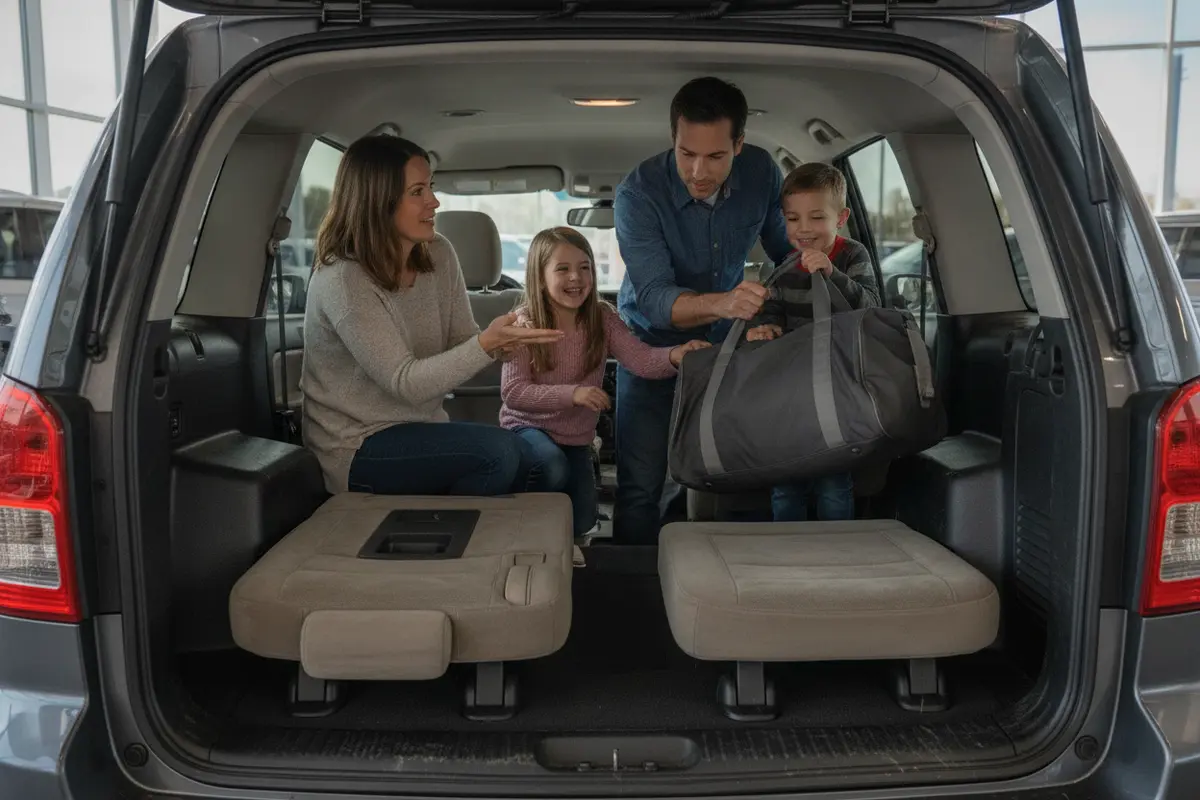
Make a short list of what you need from the vehicle. For example, if you often travel with several passengers, confirm that the seating arrangement works for your group. If you bring sports equipment, groceries, or luggage, consider the cargo space available with the seats in the position you normally use. Bring child seats or other items that need to fit, if practical, and try the arrangement yourself.
Ask what information is available about the specific vehicle and review it before deciding. Do not rely on a general model description for facts about an individual listing. If something in the listing is unclear, ask for clarification and compare the answer with the vehicle in front of you.
As you review price, ask what it includes and what additional taxes or fees may apply. Compare the amount financed, not just the advertised price. Two vehicles with similar prices may produce different financing needs if their charges, trade-in assumptions, or cash due at signing differ.
Browse used SUVs available in Fredericksburg and compare them with the Traverse you are considering. If you are open to another vehicle type, you can also review used cars or used trucks. Inventory changes, so confirm current availability and listing details before making plans.
Which questions should you ask before applying?
Know what step you are taking before you provide application information. Ask whether it is a pre-qualification or a full application, whether it involves a credit inquiry, and what documents may be requested. The answer can depend on the process and lender, so confirm the details for your specific application.
- What is the selling price, and which charges are included or separate?
- What amount would I finance after the down payment and trade-in are applied?
- What are the APR, term, scheduled payment, and total of payments?
- Are these terms final, or do they depend on more lender review?
- Is any protection product optional, and what is its cost if selected?
- What amount is due at signing, and what does it include?
- How would a trade payoff higher than the estimated value be handled?
- What information or documents should I have ready?
Ask for the answers in writing and take time to review them. If a document uses a term you do not understand, ask for a plain explanation before signing. Keep the figures together so you can compare offers without relying on memory. A careful review is especially useful when a payment quote changes after you adjust the term, cash contribution, or trade estimate.
How can Fredericksburg shoppers prepare for a visit?
Plan your visit around the questions you want answered. Bring a written budget, your current vehicle payoff details if you may trade it, and a list of must-have features. If you are traveling from Spotsylvania, Stafford, Culpeper, Woodbridge, or King George, check the current listing and confirm availability before making the drive.
Auto Fanatics is an independent used-car dealership in Fredericksburg with a no-pressure approach and a focus on transparent pricing. The dealership reports more than 500 five-star reviews. You can read customer testimonials as one source of context, then prepare questions that are specific to your own purchase.
During a visit, take time to confirm the vehicle details, consider how the seating and cargo arrangement fit your routine, and review financing documents without rushing. If you compare several vehicles, use the same budget assumptions for each one. For example, keep the same planned down payment and term while comparing the amount financed and total repayment. This makes the differences easier to understand.
Before you leave, make sure you know which items are confirmed and which remain subject to lender review. Keep a copy of the figures you are comparing and decide at your own pace. Clear answers and a realistic budget matter more than choosing the first payment that looks appealing.
Frequently asked questions
Can I explore Chevrolet Traverse financing with different credit histories?
Financing availability and terms depend on lender review. Auto Fanatics offers financing solutions for different credit situations and access to Capital One pre-qualification. Ask what process applies to you and confirm any offer terms directly with the lender.
Does pre-qualification guarantee a loan?
No. Pre-qualification is an early step for exploring potential options, not a guarantee of final approval, APR, or payment. A lender may need additional information and review before making a final decision.
Will a larger down payment always be better?
A larger down payment reduces the amount financed, but it should still fit your broader budget. Compare the resulting loan terms and keep enough cash for other planned needs rather than focusing on one number alone.
What if I owe more on my current vehicle than its trade value?
Request a current payoff and a written explanation of how any difference would be handled. Compare the figures before deciding whether to trade, sell separately, or wait. Do not assume the payoff difference disappears when you change vehicles.
What should I compare between two financing offers?
Compare the APR, amount financed, term, scheduled payment, total of payments, and any charges or optional products. Keep the vehicle price and down-payment assumptions consistent, and ask the lender to explain anything that is unclear.
A sound purchase starts with a payment you can manage, clear written loan terms, and a Traverse that fits your daily life. Take the time to compare the full cost before you decide.