Clean Title Used Cars: What the Title Tells You
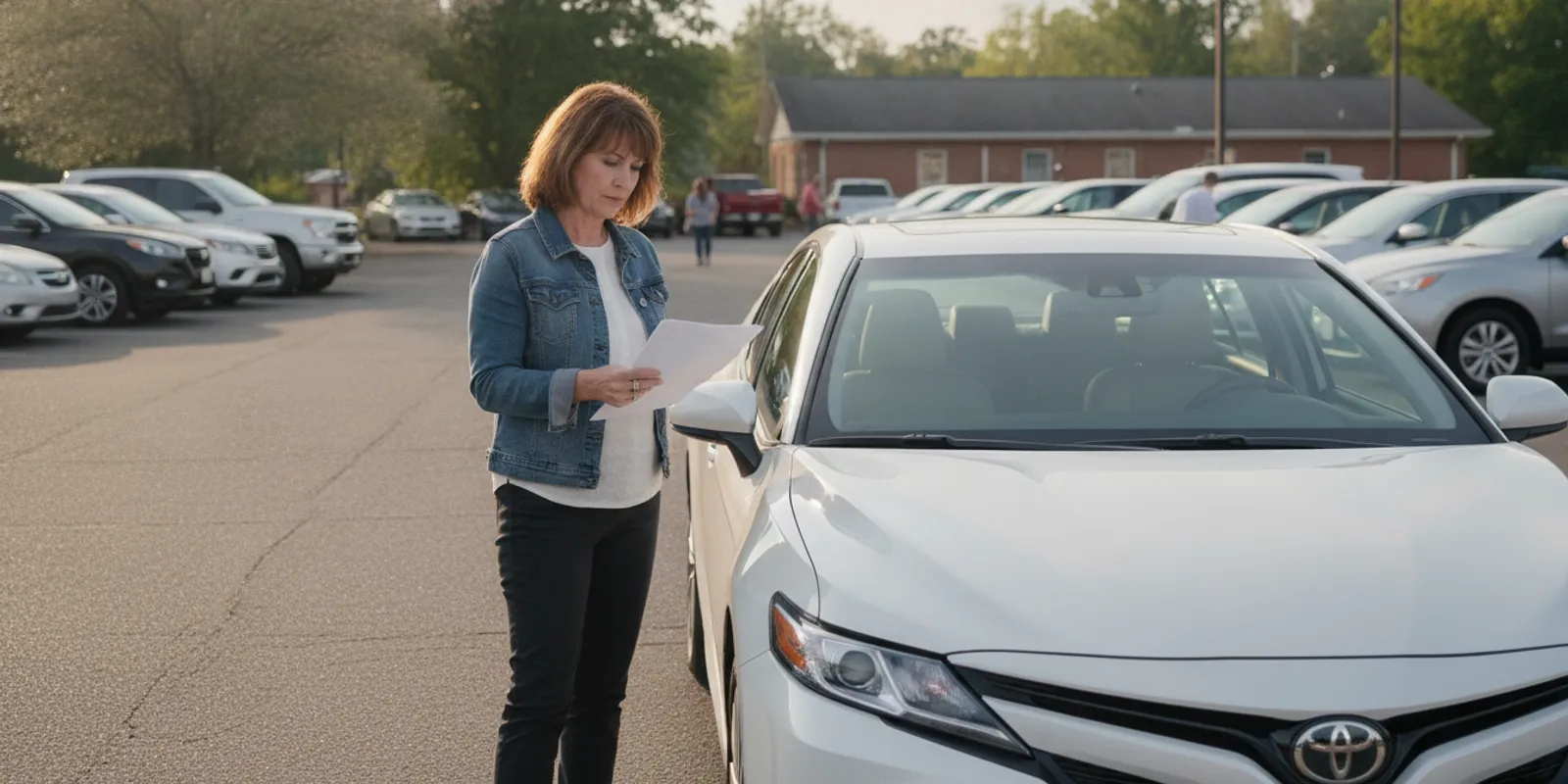
When comparing clean title used cars, the title can help clarify a vehicle's recorded status, but it cannot tell you everything about its past or present condition. Think of title status, vehicle history, and mechanical condition as three separate questions. Reviewing all three gives you a more useful picture than relying on one reassuring phrase. For shoppers in Fredericksburg and nearby Spotsylvania or Stafford, keeping those questions separate can make a local search easier to evaluate.
Browse available clean title used cars in Fredericksburg
What Do Clean Title Used Cars Tell You?
A clean title generally means that the title document does not carry a major brand such as salvage or rebuilt. A title is an official ownership record, and a brand is a formal notation that identifies a particular status or event under the rules that apply to the vehicle. The terminology, reporting practices, and procedures can vary by state. If you are unsure what a title says, ask for the actual document or a clear explanation of the vehicle's recorded status.
Most importantly, “clean” is not the same as “never damaged,” “fully inspected,” or “guaranteed reliable.” Damage may be repaired without resulting in a title brand. A title also cannot tell you whether the engine, transmission, brakes, tires, electronics, or safety systems are working properly today. Those questions need different evidence, such as service records, an inspection, and a careful look at the vehicle.
Use the term as a starting point, not a final verdict. A clean title can be reassuring when the details are consistent, but it should not replace questions about past use, maintenance, repairs, or current condition. Likewise, a title brand is important information, but the word on the document alone may not explain the full cause, the repairs completed, or the vehicle's present state.
How Is a Branded Title Different?
A branded title carries a designation indicating a specific status. Depending on the jurisdiction and circumstances, examples can include salvage, rebuilt, or flood-related branding. Do not assume that every state uses identical definitions, or that one term tells the complete story. Ask what the brand means for this particular vehicle, what event led to it, and what records support the explanation.
When a title has a brand, consider the implications before you compare prices. Ask what repairs were made, whether photographs or repair invoices are available, and whether a qualified mechanic can inspect the vehicle. You may also want to check with an insurer, lender, or the relevant state agency about any questions that affect your own decision. Do not rely on a salesperson, a listing description, or a general online explanation as a substitute for confirming a vehicle-specific or state-specific issue.
A practical comparison helps keep the terms in perspective:
| Record or condition | What it can help show | What it cannot prove by itself |
|---|---|---|
| Title and title status | Ownership record and any brand or notation shown on the available document | Every prior repair, every incident, or current mechanical condition |
| Vehicle history report | Events and records received by the report provider | A complete account of the vehicle's life or proof that no unreported event occurred |
| Maintenance and repair records | Work documented by the shops or owners who kept those records | Work that was not documented or whether every current system is functioning |
| Independent inspection | Observations or diagnostic findings about condition at the time of inspection | Legal ownership status or a guarantee about future reliability |
| Buyers Guide and sale paperwork | Disclosures, stated warranty terms, price, and transaction details | Future repair costs or a promise beyond the written terms |
The Federal Trade Commission explains that a Buyers Guide is required on used cars sold by dealers and covers topics including vehicle history reports, warranties, and payment options. Read the guide attached to the vehicle and ask how its statements fit with the contract before signing. The FTC's used-car buying guide for dealer purchases is a useful reference for understanding the document.
Which Documents Should You Review Before Deciding?
Gather documents before you become attached to one interpretation of the car. Check that the vehicle identification number (VIN) on the car matches the number shown on the title information, report, and sale documents. A mismatch may be a simple clerical issue, but it must be explained and corrected rather than ignored. If a document is not available yet, ask what will be provided and when.
- Title or title-status information: Look for brands, notations, ownership details, or anything you do not understand. Ask who currently holds the title and what steps remain before transfer.
- Buyers Guide: Read the dealer-provided guide, especially the warranty or as-is statement. Make sure you understand it and that any discussion about coverage is reflected in the relevant written documents.
- Purchase agreement: Review the vehicle price, fees, taxes, any optional products, and the amount due. Ask for an itemized explanation if a line is unclear.
- Financing documents: If financing, separate the vehicle's price from the credit terms. Review the amount financed, annual percentage rate, payment schedule, and total of payments, as applicable to the contract.
- Service and repair records: Ask which maintenance, repair, or damage records are available. A gap in the paperwork is not proof of a problem, but it is a reason to ask what can be verified.
- Inspection information: Ask what inspection has been performed and what it covered. If you want another opinion, consider arranging an independent inspection before purchase.
Put the records side by side. A title may show no brand while a history report lists an accident. That does not automatically prove the records conflict: the incident may not have resulted in a title brand. A history report may also lack an event recorded elsewhere, because reports depend on information supplied to their providers. The aim is not to force every document to say the same thing; it is to understand what each one does and does not establish.
How Should You Read a Vehicle History Report?
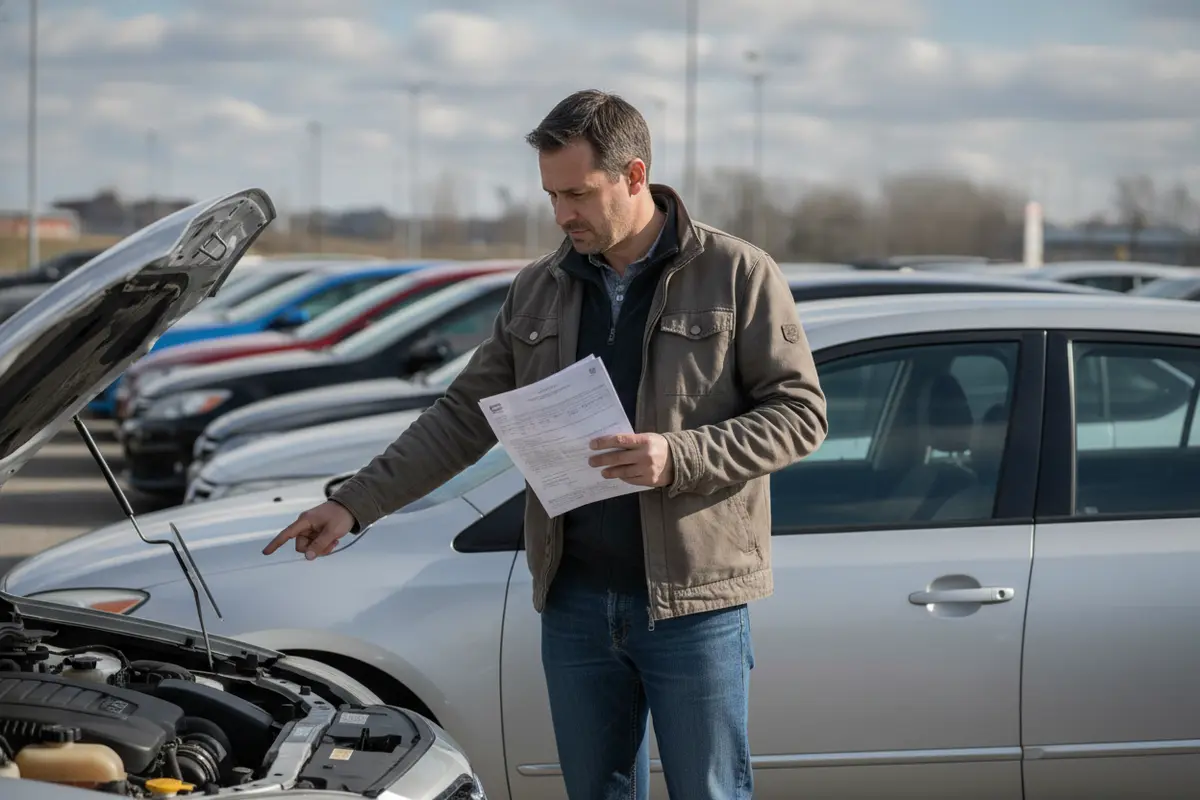
A history report can collect information such as recorded title events, mileage entries, accident records, or other reported details, depending on the provider and available sources. It can save time by pointing you toward questions, but it is not a complete biography of the car. A clean report means that the provider found no relevant event in the records it checked; it does not prove that no event occurred.
Review a report actively rather than scanning only for a warning label. Confirm the VIN. Note the dates and mileage entries. Look for gaps, abrupt changes, or items that need context. If an incident appears, ask what happened, what repairs were done, and whether there are supporting invoices or inspection findings. If the mileage history appears inconsistent, ask the seller to explain the entries and provide records that help reconcile them.
For example, suppose the title information shows no brand, but the history report lists a collision several years ago. The right next question is not simply “Is the title clean?” Ask whether repairs were completed, whether records are available, and whether a qualified inspection finds evidence of a remaining concern. Conversely, if no accident appears in the report, do not treat that as proof the vehicle has never had bodywork. Look at the car, ask direct questions, and consider inspection where appropriate.
Florida's highway safety agency advises used-vehicle shoppers to ask about title history, condition, mileage, and use. Its guidance is from Florida, so it does not define Virginia procedures; however, those are sensible subjects to investigate in any used-car review. See the Florida Highway Safety and Motor Vehicles buyer guidance, and confirm Virginia-specific paperwork questions with the appropriate Virginia authority.
What Should Virginia Buyers Ask About the Title?
Virginia shoppers should keep vehicle-specific questions distinct from state procedure questions. Whether you are comparing cars in Fredericksburg, Spotsylvania, Stafford, Culpeper, Woodbridge, or King George, ask the seller what paperwork will be provided, what the title currently shows, and what remains before the transaction is complete. If you need to know an exact filing, timing, fee, or eligibility requirement, confirm it with the appropriate Virginia agency; requirements can depend on the transaction and current rules.
These questions can make a conversation more specific:
- Can I review the title information or documentation that supports the stated title status?
- Does any title brand or notation appear, and what does it mean for this vehicle?
- Do the VINs on the vehicle and each document match?
- Who holds the title now, and what is the process for completing the transfer?
- Are there repair, maintenance, or prior-damage records you can share?
- What does the Buyers Guide say about warranty coverage or an as-is sale?
- What inspection has been completed, and may I arrange an independent inspection?
- Which documents will I receive, and which steps, if any, must I complete after the sale?
Listen for clear, consistent answers and ask for important details in writing. If you hear a verbal assurance that differs from the title information, Buyers Guide, or contract, pause and ask for clarification. Do not sign paperwork that you do not understand. If the issue involves legal interpretation or state procedure, seek confirmation from the relevant authority or a qualified professional rather than guessing.
How Should You Compare Clean Title Used Cars?
Use the same sequence for every vehicle on your shortlist. This avoids comparing one car's paperwork with another car's appearance and calling the result a fair comparison. For each vehicle, make a simple record of what you verified, what remains unclear, and what action would answer the open question.
- Start with identity. Record the VIN from the vehicle and compare it with the title information, history report, and sale documents. Resolve any mismatch before moving forward.
- Read title status. Note whether the documents show a brand or other notation. Ask what unfamiliar language means rather than assuming a title is clear because someone described it that way.
- Check the report's timeline. Compare mileage entries and listed events. Mark gaps or discrepancies for follow-up, but remember that missing data does not establish that nothing happened.
- Review supporting records. Ask for service, repair, or damage documents. Compare dates and descriptions with the report and the seller's explanation.
- Assess current condition. Walk around the vehicle, examine the interior and visible components, and consider an independent mechanical inspection. A title document cannot substitute for this step.
- Read the sale terms. Review the Buyers Guide, purchase agreement, and financing documents. Make sure the written terms match your understanding of the price, coverage, and transaction.
- List unresolved questions. Decide what information would address each concern. If an important question remains unanswered, wait rather than filling the gap with an assumption.
A compact comparison worksheet can be more useful than relying on memory after looking at several cars. Write one row for each candidate and use the same columns: title status, report findings, records received, inspection observations, unresolved questions, and next step. “No brand reported” belongs in the title-status column; “no repair invoices available” belongs in records. Keeping these observations separate reduces the risk of treating one positive finding as proof of everything else.
For instance, imagine two vehicles with similar mileage and asking prices. Vehicle A has a title with no brand, a report with a mileage gap, and few maintenance records. Vehicle B has a title brand that the seller explains with repair records, but its report and inspection findings appear consistent. Neither can be selected responsibly from the title phrase alone. The shopper should investigate the mileage gap on A and the meaning, repair quality, and practical implications of B's brand, then weigh the verified facts and personal comfort level.
What Else Belongs in the Purchase Decision?
Title research is important, but it is only one part of deciding whether a vehicle fits your needs. Consider how you will use the car, its current condition, the written sale terms, and the total cost. A shopper traveling from Stafford or Woodbridge along I-95 may compare several vehicles in one trip, but the same document checklist still applies. A lower asking price does not resolve a title question or make an unexplained record discrepancy disappear. A clean title does not automatically make a vehicle a better match than another car with a different history and stronger documentation.
Compare the complete price rather than only the advertised figure. Review fees, taxes, financing terms, optional products, and any other listed charges in the paperwork. Ask which items are optional and which are required for the transaction. If you are weighing a sedan, SUV, or truck, consider the vehicle's actual space and use needs alongside its records. Auto Fanatics shoppers can compare available cars, SUVs, and trucks while applying the same title and condition checklist to each.
Choosing a vehicle type does not settle its title status, so review the specific vehicle rather than generalizing from a model or body style. You can also compare used Honda inventory or used Toyota inventory as examples of how to narrow a list by make. Inventory changes, and a listing is not a substitute for reviewing the paperwork and condition of the individual car you are considering.
What Can a Dealer's Inspection and Reviews Tell You?
Auto Fanatics describes its used vehicles as inspected. Ask what an inspection covers for the specific vehicle, whether any findings or available reconditioning information can be shared, and what the limits of that inspection are. Inspection is a useful part of due diligence, but no inspection can establish every past event or guarantee future reliability. If you want a separate assessment, ask about arranging an independent inspection before purchase.
Customer reviews can help you understand other shoppers' experiences with communication and the buying process. Auto Fanatics reports more than 500 five-star reviews. Reviews are not evidence of a specific car's title status or mechanical condition, so evaluate the vehicle's documents on their own merits. You can read customer testimonials for context about customer experiences, then ask your own vehicle-specific questions.
In a no-pressure purchase conversation, it is reasonable to take time to compare documents and ask follow-up questions. Transparency means that the price, fees, terms, and available vehicle information should be understandable to you before you commit. If a salesperson gives you an answer, use it to identify what evidence you want to see; do not treat a general explanation as a replacement for the relevant document.
How Can You Follow Up on Unclear or Conflicting Information?
When two sources seem to disagree, write down what each one actually says before deciding that one must be wrong. “No title brand shown” is a statement about the document's recorded designation. “Collision reported” is a statement that a data provider received an event record. Those statements can both be true. A useful follow-up asks how the event was handled and whether documentation is available, rather than demanding that one phrase erase the other.
Use a simple question-and-evidence sequence:
- Identify the source. Note whether the information came from the title document, a history report, a repair record, an inspection, or a verbal explanation.
- State the mismatch neutrally. For example: “The report shows a mileage entry that is higher than the next entry. Can we review the dates and source records together?”
- Ask for evidence that addresses that specific point. A service invoice, inspection result, corrected paperwork, or explanation from the reporting source may help, depending on the issue.
- Decide whether the answer resolves your concern. If the explanation is incomplete, keep the issue open. Do not reinterpret missing records as proof of a clean history.
Some questions call for different kinds of answers. A title-status issue may require a document or confirmation from a state authority. A mechanical concern may call for a qualified mechanic's assessment. A warranty question should be checked against the Buyers Guide and contract. A payment or fee question belongs in the written purchase and financing documents. Asking the right source for the right kind of evidence makes the conversation more productive.
It can also help to distinguish a missing answer from a negative answer. If a service record is not available, that does not show that service was never performed; it means you cannot verify that work from the material provided. If a report does not list an accident, it does not prove that no repair occurred. When information cannot be verified, account for that uncertainty in your decision rather than silently treating it as confirmation.
Before signing, take another pass through your notes. Confirm that the VIN is consistent, the title status is understood, material report entries have been discussed, and the contract matches the terms you agreed to. If an important point is still unresolved, you can take time to seek clarification instead of making a decision under pressure. A careful process should leave you able to explain both what you know and what you do not know about the vehicle.
Compare used cars available in Fredericksburg before you decide
Frequently Asked Questions
Does a clean title mean a car has never been in an accident?
No. It generally indicates that the title does not show a major brand, but not every collision or repair results in a branded title. Review available history, repair records, and current condition rather than drawing a conclusion from title status alone.
Can a vehicle history report prove that a car is problem-free?
No. A report reflects information its provider has received from available sources. It may be missing events or repairs that were never reported. Use it to guide questions, and compare it with title information, supporting documents, and an inspection.
What should I do if the title and history report seem inconsistent?
Pause and identify the exact discrepancy. Ask the seller for an explanation and supporting records, and check that the VIN matches. A collision record and an unbranded title are not automatically inconsistent, but unexplained differences should be resolved before you decide.
Should I buy a car with a branded title?
There is no universal answer. Find out what the brand means, why it was applied, what repairs were completed, and what a qualified inspection finds. Consider your comfort with the vehicle's records and confirm any insurance, financing, or state-process questions with the relevant party before committing.
Is a clean title enough reason to skip an inspection?
No. A title records status; it does not examine the car's mechanical systems or establish current condition. Review inspection information and consider an independent inspection if you want another assessment.
A clean title is useful information, but it is not a complete history or condition report. Match the records to the vehicle, investigate open questions, and make your decision only when you understand the evidence in front of you.