Ford F150 Buying Guide
A Ford F-150 can serve as a work truck, a family vehicle, or a mix of both, but the right choice depends on how you will use it. This Ford F150 buying guide gives Fredericksburg-area shoppers a practical way to compare truck size, configuration, features, condition, and cost before choosing a vehicle.
Browse used vehicles in Fredericksburg
What should you decide before shopping for a Ford F-150?
Start with the jobs the truck must handle in an ordinary week. Think about how many people ride with you, what you carry, where you park, and whether the truck will spend more time on local roads or longer trips. A clear use case helps you avoid paying for a configuration or feature that does not matter to you.
Write down your three most important needs. For example, a buyer who regularly carries adult passengers may put rear-seat space first. Someone who hauls bulky equipment may care more about bed length and how easily the cargo can be secured. If you need a truck for both, note which task takes priority and which compromises are acceptable.
- People: How many passengers ride along, and how often do they use the back seat?
- Cargo: What do you carry, how large is it, and how often does it travel in the bed?
- Driving: Do you mostly make short local trips, commute, or travel on highways?
- Parking: Will the truck fit your garage, driveway, and usual parking spaces?
- Future needs: Could work, family, or recreation needs change during the time you own it?
Be specific about towing or payload needs if they apply. A truck's capability depends on its exact configuration and equipment, so do not assume that every F-150 can handle the same load. Confirm the rating for the particular vehicle and compare it with the load or trailer you actually expect to carry. If the truck's rating is unclear, ask for verified information before deciding.
It is also useful to distinguish a must-have from a preference. Four-wheel drive, a particular cab style, a large screen, or a certain appearance package may be important to you, but each can narrow the options. Decide which features are essential and which you would trade away for a better fit, a more comfortable condition, or a price that fits your plan.
How do cab, bed, and drivetrain choices affect daily use?
F-150 listings can differ in cab configuration, bed length, drivetrain, engine, trim, and installed equipment. The names and combinations vary by model year. Compare the details shown for each specific truck rather than relying on a broad label such as “F-150” or assuming that two listings with similar names are equipped alike.
| Choice | What to compare | Questions to ask yourself |
|---|---|---|
| Cab | Passenger space, door layout, and ease of entry | Who rides in back, and how often? |
| Bed | Length, cargo fit, and access | Will your usual items fit with room to secure them? |
| Drivetrain | Two-wheel or four-wheel-drive configuration and your intended use | Do your routes or work needs call for the added capability? |
| Engine and equipment | Exact configuration, stated capabilities, and installed features | Does this specific truck meet your verified needs? |
| Trim and cabin features | Comfort, controls, storage, and technology you will use | Which features improve your daily routine? |
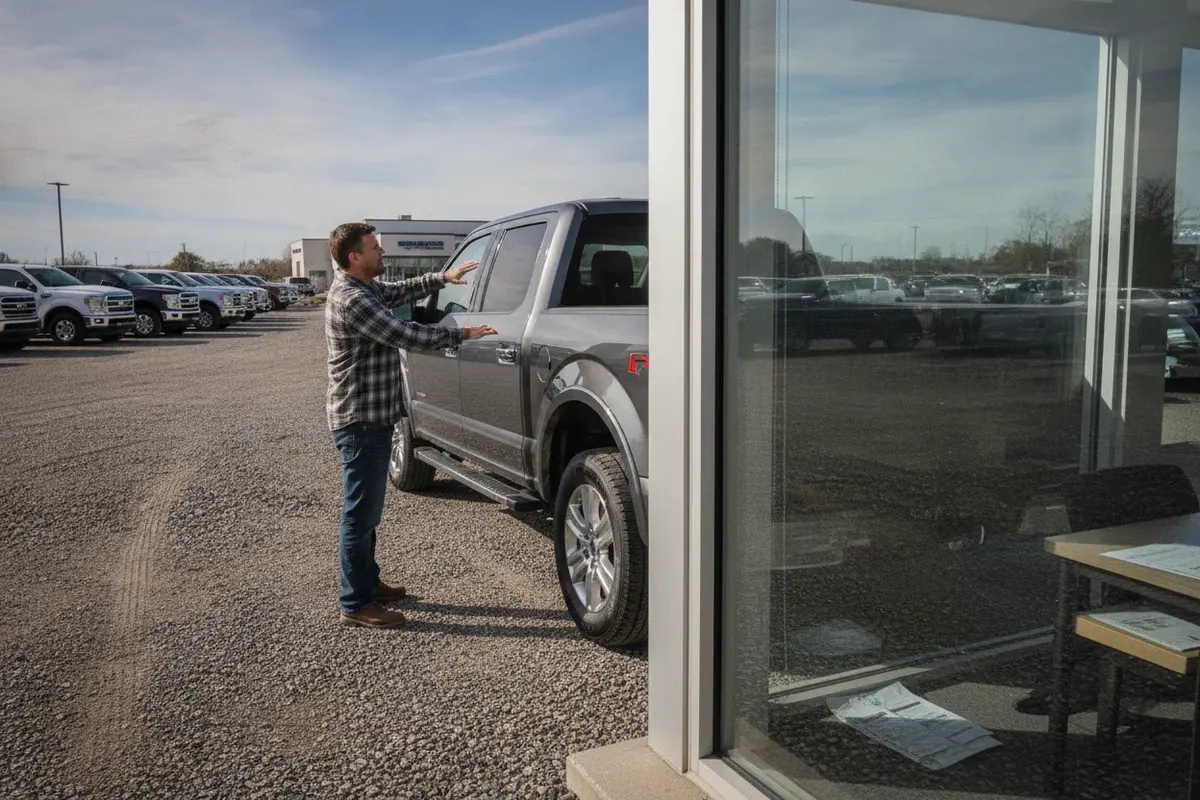
A cab that looks roomy from outside still needs to work for the people who will ride in it. Sit in both rows if you expect to use the rear seats. Check entry and exit, headroom, legroom, seat comfort, and whether a child seat can be installed the way you need. Bring the people or equipment that can help you judge the fit, if practical.
For the bed, picture your actual cargo rather than an idealized use. Measure long or unusually shaped items at home, then compare those measurements with the bed dimensions for the specific truck. Think through loading height, tie-down points, and whether a cover or other accessory is needed. Accessories and modifications should be confirmed on the truck you are considering.
Four-wheel drive can be useful for particular work and road conditions, but it is not automatically necessary for every driver. Consider where you drive around Fredericksburg and beyond, including your access road and the places you visit in poor weather. Match the equipment to a real need, and review how the specific system operates before you rely on it.
Use these comparisons to narrow the search, not to declare one configuration universally best. You can start with used pickup trucks available in the area and compare the details on each listing. If a truck's configuration is not clear, ask for clarification rather than filling in the gaps from another model year or trim.
What should you evaluate on a specific used F-150?
Once a listing looks promising, review the exact vehicle, not just its model name. Confirm the year, trim, cab, bed, drivetrain, engine description, mileage, listed equipment, and asking price. Make a short list of details that are important to your intended use, then see whether the listing answers them. Missing information is a reason to ask a question, not a reason to assume.
Plan a hands-on visit when possible. Walk around the truck in good light and take your time. Look for visible differences in paint, body panels, glass, lights, tires, and the bed. Check that doors and the tailgate open and close as expected. These observations do not replace a qualified mechanical evaluation, but they can help you identify questions to raise before moving forward.
- Does the seating position feel comfortable, and can you reach the controls easily?
- Do the cab and bed match the people and cargo you expect to carry?
- Do the tires appear consistent, and are there visible warning lights when the vehicle is started?
- Do the lights, windows, locks, climate controls, and other listed features operate during your visit?
- Are there visible marks, changes, or accessories you want explained?
- Can the seller clarify any equipment, capability, or listing detail that matters to your decision?
Take a test drive on a route that gives you a fair sense of the truck's behavior. If possible, include slower streets and a faster road, while following all traffic laws. Notice your view of the road, steering feel, braking response, visibility, cabin noise, and how the truck fits your normal driving. If something seems different from what you expect, pause and ask about it.
For questions about recalls, consult the National Highway Traffic Safety Administration's official site at NHTSA and use its vehicle-safety resources. Have the vehicle identification number available when using a vehicle-specific lookup. A recall search is only one part of your research; it does not establish the truck's overall mechanical condition or answer every question about its past.
Ask what information is available for the vehicle and what it does or does not establish. Do not treat a single document or online result as a complete substitute for asking direct questions and seeking an independent professional opinion when that is part of your buying process. Before you commit, make sure you understand any condition-related information and the terms of the sale.
How can you set a realistic F-150 budget?
Set a total vehicle budget before comparing monthly payments. Include the purchase price and the other costs that may apply to your situation, such as taxes, title and registration expenses, insurance, fuel, and future maintenance. The exact amounts vary, so use figures that reflect your circumstances and ask for a clear explanation of any charges in a proposed deal.
Then decide what payment range is comfortable without treating the longest loan term as the best option. A lower monthly amount can come with a longer repayment period and more total interest. Compare the amount financed, annual percentage rate, term, payment, and total of payments together. Ask for the terms in writing so you can review them carefully.
If you plan to trade in a vehicle, estimate its value separately from the price of the F-150. Consider the trade-in amount, any amount still owed on your current vehicle, and how each figure affects the transaction. Keeping those figures visible makes it easier to compare offers and understand the full cost rather than focusing on just one part of the deal.
Financing options depend on the buyer, vehicle, lender, and final terms. Auto Fanatics offers Capital One pre-qualification, which the company describes as having no credit impact. Pre-qualification is not the same as a final loan approval or a promise of a specific rate or payment. Review any application and offer details directly, and ask what steps remain before financing is final.
Make a side-by-side comparison of the trucks you are considering. Record the asking price, mileage, configuration, condition questions, equipment, and any financing terms you have received. The point is not to choose the cheapest listing automatically. It is to understand what you are getting for the total cost and whether each truck meets your must-haves.
Which questions help you compare F-150 listings fairly?
Use a consistent question set for every truck. That keeps one appealing feature or a quick payment estimate from distracting you from important differences. It also makes it easier to discuss a listing with a salesperson and to follow up on details that need confirmation.
- What is the exact configuration? Confirm the year, cab, bed, drivetrain, engine description, trim, and installed equipment.
- Does it match my use? Compare its seating and cargo space with your daily needs, and confirm any capability rating you rely on.
- What condition information is available? Ask for clear answers to your questions and note anything that should be reviewed further.
- What is included in the price? Request an itemized explanation of the amount due and any applicable fees or add-ons.
- What are the financing terms? Compare the amount financed, rate, term, payment, and total repayment, not just one figure.
- What happens next? Ask which documents, decisions, or steps remain before you can complete the purchase.
Keep your notes factual. For example, write “rear seat feels tight for three adults” instead of “bad cab,” or “need confirmation of towing rating” instead of assuming the truck will work. This helps you revisit the decision after the visit and makes follow-up questions more focused.
When comparing two trucks, identify what would make you choose one over the other. A newer model year may have features you value, while a different configuration may better fit your cargo needs. Mileage, price, condition, equipment, and financing all matter, but their importance depends on how you will use the vehicle and what the specific listings show.
If you are exploring other vehicle types alongside a pickup, you can also compare the used SUV selection or used cars and sedans. Those options may fit a different balance of passenger space, cargo, and everyday driving. Compare them against the same budget and practical needs rather than changing your priorities simply because a different vehicle is available.
How can Fredericksburg-area shoppers prepare for a visit?
Before leaving home, save the listings you want to discuss and write down the details you need confirmed. If you are coming from Spotsylvania, Stafford, Culpeper, Woodbridge, or King George, allow enough time for the trip and the vehicle review. Local traffic and travel on I-95 can affect your schedule, so avoid planning a visit around an overly tight window.
Bring a valid driver license if you plan to test-drive, and check in advance whether anything else is needed. Bring measurements for cargo or parking constraints, plus a list of questions about features and terms. If another person will regularly drive the truck, having them participate can help you evaluate comfort, visibility, and controls from their perspective.
Use the visit to verify rather than rush. Ask to see the vehicle and compare it with the listing. If you want to review financing, understand what information is requested and what a pre-qualification or application involves. You should have time to read the figures and ask for explanations before deciding whether to proceed.
Auto Fanatics is a Fredericksburg dealership with more than 500 five-star reviews, according to its company information. You can read customer testimonials as one part of deciding where to shop. Reviews can offer perspective on other customers' experiences, but your own questions about the vehicle, price, and terms still deserve clear answers.
When you are ready to narrow your search, use the dealership's used vehicle listings to review available options and compare the details. Inventory changes, so confirm that a particular truck is currently available before making travel plans. If there is no F-150 that meets your needs at the moment, you can decide whether to wait, broaden your search, or compare another vehicle type.
Explore used vehicles at Auto Fanatics
Frequently asked questions
What is the most important thing to check when buying a used F-150?
Start by confirming that the exact truck's configuration and condition fit your needs. Verify cab, bed, drivetrain, equipment, and any capability rating that matters to you. Then review the vehicle in person, ask direct questions, and make sure the full price and terms are clear before deciding.
Should I choose a particular F-150 cab or bed?
Choose based on the people and cargo you regularly carry. Compare rear-seat comfort and access if passengers ride with you, and measure the items you expect to load in the bed. The right combination is the one that serves your routine and fits your parking and budget constraints.
Is four-wheel drive necessary for a used F-150?
Not for every driver. Think about your usual roads, work, and travel conditions, then compare the specific truck's drivetrain and equipment. Confirm how the system works and whether the vehicle's capabilities match your actual needs.
Can I get pre-qualified for financing before choosing a truck?
Auto Fanatics offers Capital One pre-qualification, which it describes as having no credit impact. Pre-qualification does not guarantee final approval or specific financing terms. Review the information requested and any final offer directly with the lender or dealership.
How do I compare two used F-150s?
Record each truck's year, configuration, mileage, condition information, features, price, and financing terms. Compare the same details for both, then weigh them against your must-haves and total budget. Ask for clarification wherever a listing leaves an important point unanswered.
A good choice is the F-150 that fits your actual work, passengers, driving, and budget, with details you have taken time to verify. Use your notes, ask questions, and move forward only when the vehicle and terms make sense to you.