Preowned Ford Expedition: A Used SUV Buyer Guide
A preowned Ford Expedition can give your household the room and flexibility of a full-size SUV, but the right choice depends on how you will use it. Before you focus on a particular year or trim, think through passenger space, cargo needs, towing plans, condition, and the total cost of ownership. Those details matter whether you are shopping in Fredericksburg, Spotsylvania, Stafford, Culpeper, Woodbridge, or King George.
Explore used vehicles in Fredericksburg
Start with the way you will use the Expedition
A full-size SUV can suit a busy family, a driver who regularly carries passengers, or someone who needs room for bulky gear. But a larger vehicle is not automatically the best fit. Consider your usual trips, the number of people who ride with you, and where you will park. A vehicle that works for a long highway trip may feel different in a crowded parking lot or on a narrow neighborhood street.
Make a short list of your everyday requirements before visiting a vehicle. Separate must-haves from preferences. For example, you might need three rows for regular passengers but only want a particular trim or color. This helps you compare the vehicle itself rather than getting distracted by one feature.
- Passenger use: How often will adults, children, or car seats occupy the second and third rows?
- Cargo use: Do you carry groceries and strollers, or larger equipment and luggage?
- Driving conditions: Will most miles be local, on I-95, or on mixed roads?
- Parking: Can you comfortably fit a large SUV at home and at your regular destinations?
- Ownership horizon: How long do you expect to keep the vehicle, and what maintenance costs can you plan for?
Write down your typical load, not just the biggest trip you might take once a year. If you usually drive with two passengers and modest cargo, another vehicle size may be easier to live with. Browse available used SUVs in Fredericksburg to compare shapes and sizes before settling on one model.
It can help to make a simple two-column list: what you need every week and what you need only occasionally. If a third row is important only for a few family visits, check whether the Expedition's size and ongoing costs still make sense for daily errands. If you carry passengers often, ask those riders to help evaluate access and comfort rather than guessing from a quick walk-around.
How should you compare seating and cargo space?
Seat count alone does not tell you whether an SUV will work for your passengers. Try each row you expect to use. Check entry and exit, foot room, headroom, and whether the seat positions allow everyone to sit comfortably. If you use child safety seats, bring them along and confirm they fit the seating positions you plan to use. Do not assume the third row will be comfortable for every passenger simply because it is present.
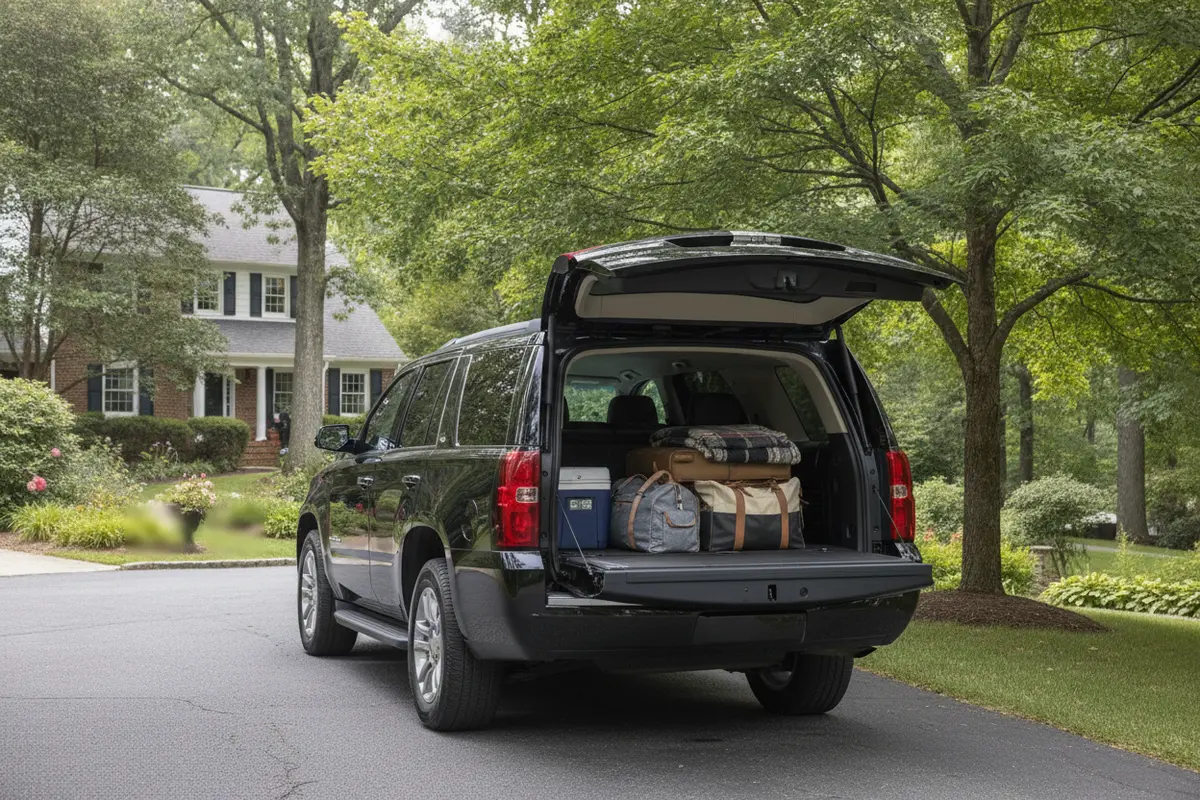
Next, test the cargo area in the configuration you actually need. Fold the third row and see what space remains behind the second row. Then raise the third row and consider what happens to luggage room. Check whether your usual stroller, sports equipment, mobility aid, or weekly shopping load fits without blocking your view or making items difficult to secure.
Try loading a bulky item from the side and the rear, if practical. Look at the height of the cargo floor and the opening, since an object that fits on paper may be awkward to lift or angle through the hatch. If you travel with a stroller, measure it while folded and compare it with the space left when the seats are arranged for the people who will ride along.
Compare the process of folding and raising the seats, too. Make sure you can operate the mechanisms easily and that the arrangement works for your household. Look at storage areas and charging or convenience features only after the basic seating and cargo layout fits. Features differ by year and trim, so confirm them on the specific vehicle rather than relying on a general model description.
What should you know about towing and everyday driving?
If towing is part of your plan, identify the trailer and its loaded weight before you shop. The maximum rating advertised for a model is not a promise that every Expedition can tow that amount. Capacity can change with model year, engine, drivetrain, equipment, and the vehicle's own loading. The hitch, trailer setup, payload, and the weights of passengers and cargo all matter as well.
Ask for the exact vehicle's towing information and compare it with the trailer manufacturer's loaded-weight figures. Check the owner's manual and vehicle-specific labels, and do not base a decision on a number for a different trim or model year. If you cannot confirm that the exact combination is within its limits, get qualified guidance before towing. Towing near a vehicle's limits can affect braking, handling, and the equipment required.
For everyday driving, take a test drive on roads similar to those you use. Include ordinary turns, a safe stretch of highway, and a parking maneuver if possible. Pay attention to visibility, ride comfort, braking feel, steering, and how easy it is to judge the vehicle's size. A large SUV can feel different from a sedan or compact SUV, and time behind the wheel is a useful part of your comparison.
Think about how the vehicle responds when fully occupied as well as when you are alone. Do passengers have a comfortable ride? Can you see clearly when changing lanes, and are parking sensors or cameras included and working if you depend on them? Confirm such equipment on the exact SUV, then use the test drive to decide whether its size is manageable on familiar roads, including your usual I-95 route.
| Use case | What to check on the exact vehicle | Practical question |
|---|---|---|
| Regular third-row passengers | Access, seating position, belts, and comfort with intended passengers | Can everyone get in and ride comfortably for a typical trip? |
| Frequent bulky cargo | Cargo opening, floor space, seat-folding arrangement, and tie-down options | Will your largest regular item fit in the configuration you need? |
| Occasional towing | Vehicle-specific rating, equipment, payload, and trailer loaded weight | Can you verify the complete setup is within the applicable limits? |
| Mostly local commuting | Visibility, maneuverability, parking fit, and test-drive comfort | Does the vehicle feel manageable on your regular routes? |
Which model-year details should you verify?
Start with the specific vehicle's model year, trim, mileage, equipment, and ownership documents. A model name does not guarantee that two vehicles have the same features or configuration. Compare the window sticker or vehicle details, when available, with what you can see in person. Confirm features you care about, such as driver-assistance equipment, entertainment, seating materials, or four-wheel drive, on the exact vehicle.
Build a short feature checklist before you compare listings. Write down which features are essential, which are convenient, and which you do not expect to use. Then confirm each item on the vehicle itself. For example, a trim name alone may not tell you whether a particular SUV has the seating, audio, or driver-assistance equipment you want, because options and configurations can differ.
Review the vehicle's history information if it is available, and ask what is and is not included. History information can be useful context, but it is not a substitute for examining the vehicle or asking questions about its condition. Avoid treating a clean-looking report as proof that every component is sound. Ask for clear answers about ownership, title status, known issues, and the records available for that vehicle.
Keep the scope of any report clear. Ask which vehicle identification number it covers, what date the information was checked, and whether service documents or other records can also be reviewed. If something in a record is unclear, ask for an explanation and compare it with what you can observe. A report is one input among several, not a promise about future performance.
Also check whether any safety recalls apply to the vehicle. You can use the National Highway Traffic Safety Administration's site at this Texas Department of Motor Vehicles consumer-affairs case record as an example of a document involving a certified pre-owned 2016 Ford Expedition EL purchase. It is a record of one complaint, not a general reliability finding or a recall lookup. For recall status, ask for the vehicle identification number and use an appropriate official recall resource to verify results for that exact SUV before purchase.
Do not shop by year alone or assume that an entire model year is either a safe choice or a poor one. Look at the individual vehicle's equipment and condition, then compare the asking price and your needs. If you are considering other Ford options, review used Ford vehicles alongside the Expedition to see whether another size or configuration fits better.
How can you evaluate a used Expedition's condition?
Give yourself time to look over the SUV in daylight. Walk around it and note differences in paint, panel gaps, glass, lights, tires, and visible signs of damage or repair. Look inside at the seats, carpet, controls, and cargo area. Try the key features that matter to you, including windows, locks, climate controls, seat adjustments, and the infotainment system. If something does not work as expected, ask about it rather than assuming it is a minor issue.
Make the walk-around systematic. Check each tire for visible uneven wear, and look for warning lights after the vehicle starts. Open and close each door and the liftgate, then test the seat adjustments and folding functions you expect to use. If you notice a difference between sides, a damaged trim piece, or an electronic feature that responds slowly, record the question and ask for an explanation before moving on.
During a test drive, listen for unusual sounds and notice warning lights, vibration, steering response, braking, and transmission behavior. Test the climate system and check that the vehicle operates as you expect at both neighborhood speeds and on a safe highway route. The goal is not to diagnose a mechanical problem on your own. It is to identify questions and decide what additional information you need.
Ask what condition information and service records are available for the specific SUV. Do not assume that a used vehicle has received any particular inspection or repair unless that is confirmed. If you want an independent mechanic to assess a vehicle, arrange that before purchase and clarify the process in advance. An independent evaluation can help you understand the vehicle, but no single check can guarantee that a used vehicle will never need repairs.
For a concrete example of the limits of a single document, the Texas case record linked above describes an individual consumer-affairs matter. A case record is not evidence that the same issue affects other Expeditions. Keep your assessment centered on the vehicle in front of you, its available documentation, and any questions an independent professional can address.
Pay attention to how the vehicle suits you after the drive. Is the seating position comfortable? Can you see well? Does the ride work for your passengers? Can you picture parking it at home? These are practical ownership questions, not small details. You will live with the size and feel of the SUV long after the test drive.
What costs belong in your buying decision?
Compare the full purchase picture, not only the vehicle's advertised price or a monthly payment. Ask for an itemized breakdown of the vehicle price, taxes, title and registration charges, and any other fees or optional products. Read the terms before you agree. Clear pricing makes it easier to compare two vehicles and understand which costs are required and which are optional.
Then plan for the ongoing costs of a full-size SUV. Fuel use, tires, maintenance, insurance, and repairs depend on the exact vehicle and your driving. Get insurance quotes using the vehicle information before finalizing a decision. Consider how much you drive and what you can reasonably set aside for maintenance. If a payment only fits your budget when you ignore these expenses, reconsider the price range or vehicle choice.
Financing terms also deserve a close look. Compare the amount financed, annual percentage rate, loan length, down payment, and total of payments. A longer term can reduce the monthly amount while increasing the time you owe and potentially the total cost. Choose a payment and term you can manage alongside your other expenses rather than stretching just to reach a particular model.
Buyers who want to understand their options can review financing information and ask questions before making a commitment. Auto Fanatics offers Capital One pre-qualification, which the dealership describes as having no credit impact. Pre-qualification is not a final loan approval or a guarantee of specific terms. Review the final lender offer and all contract terms before signing.
One useful way to compare financing is to write down each offer's amount financed, rate, loan term, payment, and total payments in the same format. Ask whether optional products are included in the quoted amount and how they affect the agreement. Compare the written terms rather than choosing only by the payment that appears lowest each month.
If you have a vehicle to trade, get its details together and compare the trade-in value with the purchase figures separately. A trade can change the amount you need to finance, but it should not make the vehicle price or other terms hard to understand. Ask for the numbers in writing so you can see how the pieces fit. Auto Fanatics' stated approach is no-pressure and focused on transparency, and its more than 500 five-star reviews may offer additional context about other buyers' experiences.
How can you compare an Expedition with other SUVs?
Use your must-have list to compare vehicles on the same practical points: passenger comfort, usable cargo room, towing suitability if relevant, driving feel, condition, and total cost. A different SUV may be easier to park or more appropriate if you rarely need three rows. If you regularly carry several passengers and gear, the Expedition's larger format may be worth exploring, provided the specific vehicle meets your needs and budget.
Compare a few body styles in person when you can. The used car inventory can help you consider whether a car might suit a commute, while the third-row SUV selection offers another place to compare passenger layouts. If you are open to other large SUVs, look at the available used SUV inventory and assess each vehicle on the same checklist.
For a fair comparison, use similar mileage and condition ranges where possible, and ask the same questions about equipment, records, fees, and financing. Do not assume one vehicle is a better value based on trim labels alone. Decide which features you will actually use, then compare their value against the price and the condition of each individual vehicle.
Bring your checklist to each visit and make notes immediately afterward. Record the seating and cargo setup you tested, any features you confirmed, questions that remain, and the costs you were quoted. That makes it easier to compare several options later without relying on memory or being swayed by a single appealing feature.
Compare available used vehicles
Frequently Asked Questions
Is a preowned Ford Expedition a good fit for a family?
It may be, if the seating layout, cargo space, driving feel, and ownership costs fit your family. Bring the people and child seats you expect to use, try the rows, and see whether everyday items fit with the seats arranged as you need them. The right choice depends on the specific vehicle and your routine.
Can every used Expedition tow the same amount?
No. Towing capacity and required equipment can vary by year and configuration. Check the exact vehicle's documentation and compare its limits with the loaded weight of your trailer, passengers, and cargo. Do not rely on a general model figure.
Should I choose a particular model year?
There is no single year that is right for every buyer. Compare the individual SUV's condition, equipment, records, price, and fit for your needs. Verify recalls for the exact vehicle and ask questions about anything you cannot confirm.
What should I bring when I shop?
Bring your list of must-have features, a realistic budget, and any child seats or representative cargo you need to test. If you have a trade-in, bring its basic information. You can also note questions about vehicle records, fees, financing, and features so you can compare answers consistently.
A careful comparison can help you decide whether an Expedition fits your passengers, cargo, driving, and budget. Take the time to check the exact vehicle and choose the option that works for your day-to-day life.