Used Cars With Leather Seats: What to Compare
Table of Contents
- Why Consider Leather Seats in a Used Car?
- What Is the Difference Between Leather, Leatherette, and Mixed Materials?
- Which Condition Checks Matter Most?
- Are Heated and Ventilated Seats Worth Comparing?
- How Can You Check Odor, Moisture, and Interior History?
- How Should You Compare the Value of Different Interiors?
- What Should Fredericksburg-Area Buyers Ask Before Purchase?
- Frequently Asked Questions
- Are used cars with leather seats harder to maintain?
- How do I know if a used vehicle really has leather seats?
- Should I choose leather or cloth for a family vehicle?
- Do heated seats mean the vehicle has a premium trim?
Shopping for used cars with leather seats can be about more than choosing a cabin that looks upscale in listing photos. The material, seat condition, climate controls, odor, and repair history all affect how comfortable the vehicle will be on daily drives around Fredericksburg, Stafford, Spotsylvania, and the I-95 corridor.
A careful comparison helps you decide whether the premium interior is a good fit for your routine, or whether a well-kept cloth cabin offers better value. Use this guide to compare the features in person and confirm what is included on the exact year, trim, and vehicle you are considering.
Why Consider Leather Seats in a Used Car?
Leather or leather-like seating can make a vehicle feel more comfortable and finished, especially when you spend a lot of time commuting or taking family trips. Smooth surfaces can also be simpler to wipe after a spill, while many higher trims pair upgraded seating with power adjustment, lumbar support, memory settings, heated seats, or ventilation.
Those advantages do not make leather automatically better than cloth. Leather can feel hot after sitting in direct summer sun and cold on a winter morning. It also needs sensible cleaning and conditioning, and neglected material can dry, crack, or lose its finish. The best choice depends on how you use the vehicle, who rides in it, and how the specific interior was maintained.
In Fredericksburg, a leather cabin may be appealing if you regularly carry children, pets, work gear, or muddy shoes and want a surface that can be wiped clean. If you park outside, however, pay close attention to heat exposure, sun fading, and the condition of the driver's seat bolster. A clean, durable interior in the right condition is more valuable than a premium material that has been neglected.
What Is the Difference Between Leather, Leatherette, and Mixed Materials?
Do not assume that a listing described as having leather seats means every seating surface is genuine leather. Automakers use several materials and naming conventions, and a vehicle may have leather on the main touch points with synthetic material on the sides or rear surfaces. Leatherette, synthetic leather, vinyl, and mixed-material seating can look very similar in photographs.
- Leather: Often valued for its natural feel and premium appearance, but it still needs care and close inspection for drying, cracking, or color wear.
- Leatherette or synthetic leather: Usually offers a consistent finish and easy cleanup. Its condition still matters, especially along entry points, seams, and high-contact areas.
- Leather-trimmed or mixed seating: May combine leather seating surfaces with synthetic bolsters, cloth inserts, or suede-like panels. Verify which sections use which material.
Ask for the exact trim information, window-sticker details, or manufacturer equipment description when the material is not clear. The same model can have cloth, leatherette, leather-trimmed, or upgraded seating depending on the model year and package. A knowledgeable sales team should be able to help you verify the equipment on the specific vehicle, not just the model name.
If you are deciding between body styles, you can compare used cars and used SUVs before narrowing your search by interior features. This keeps the seat material in context with passenger space, cargo needs, visibility, and the type of driving you do most often.
Which Condition Checks Matter Most?
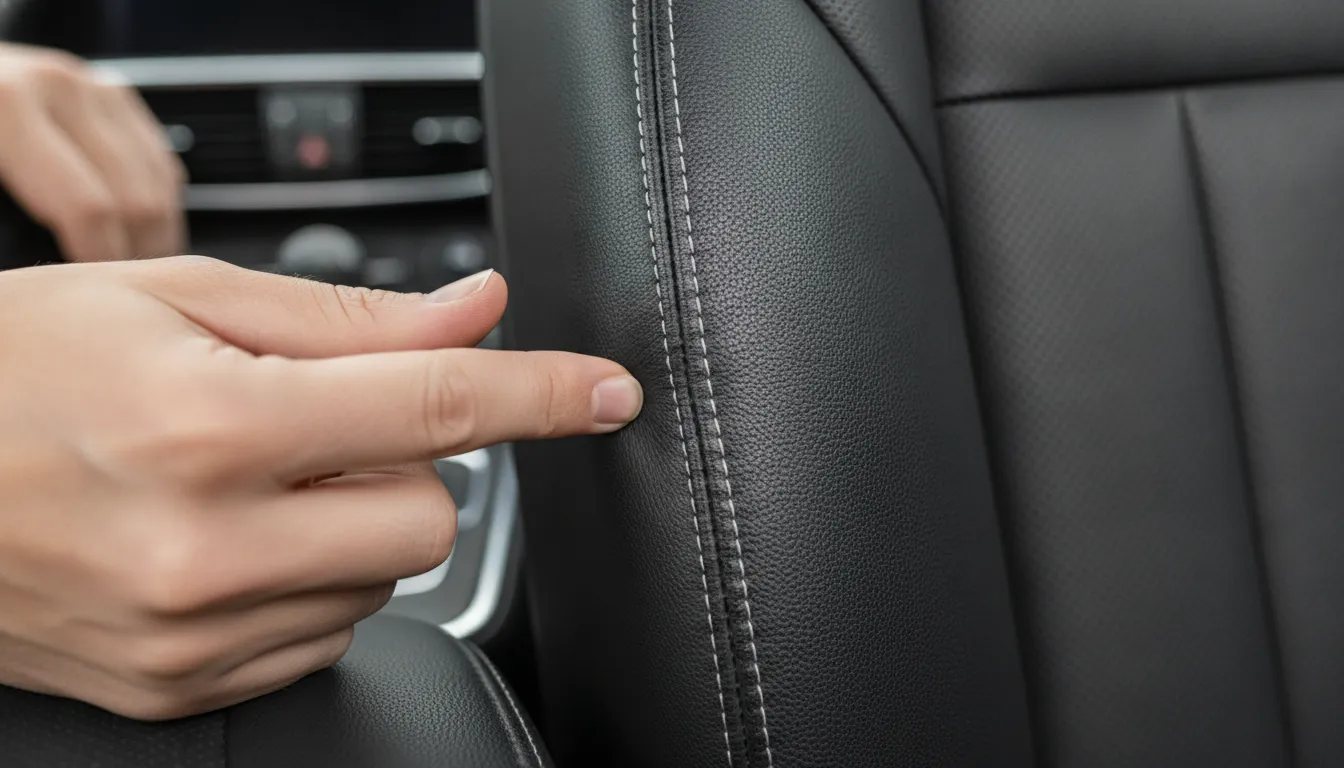
Start with the driver's seat because it usually shows the most entry and exit wear, but do not stop there. Sit in every available seating position and inspect the surfaces in good light. Compare the condition of the front seats with the rear bench, door panels, center console, and steering wheel. Wear should make sense alongside the mileage, age, and reported use of the vehicle.
- Outer bolsters: Look for flattened areas, deep creases, scuffs, cracking, exposed threads, or color loss where the driver slides into the seat.
- Seat bottoms and backrests: Check for splitting, stretched material, stains, sagging, or a surface that feels unusually hard or brittle.
- Stitching and seams: Look for loose thread, separated seams, uneven repairs, or mismatched color and texture.
- Perforations and inserts: Check that small holes are not torn, clogged, or stretched, especially if the seat includes ventilation.
- Power functions: Test seat height, tilt, recline, lumbar, memory settings, and any extension or adjustable bolster that the vehicle is advertised to have.
- Seat belts and airbags: Confirm that belts latch and retract correctly, and ask questions about any warning light or repair history before purchase.
A small surface scuff may be a cosmetic issue, while a torn seam, exposed foam, broken seat frame, or failed electronic function deserves a closer conversation. Ask whether prior upholstery or electrical work was performed, whether the repair is documented, and what an appropriate repair estimate would be. Do not let fresh conditioning product or a strong interior fragrance prevent you from examining the material underneath.
Are Heated and Ventilated Seats Worth Comparing?
Heated and ventilated seats can be valuable daily comfort features, but their presence and operation vary by trim and model year. Treat them as separate functions from the seat material itself. A vehicle can have leatherette without ventilation, or leather-trimmed seating with heating on only one seating position.
During a test drive, turn on each available heat level and give it enough time to respond. Check both front seats rather than assuming the passenger side works because the driver's side does. For ventilated seats, test every fan setting and listen for unusual noise. Confirm that airflow is even across the perforated area, and make sure the seat controls are clearly labeled and responsive.
Also test related comfort equipment, including dual-zone climate control, air conditioning, heat, defrost, power mirrors, and the seat's lumbar and memory functions. These systems can be expensive or inconvenient to repair when several components fail at once. Write down any feature that does not operate as expected and ask how it will be addressed before you make a buying decision.
How Can You Check Odor, Moisture, and Interior History?
Odor is easy to overlook when a vehicle has been recently detailed. Let the cabin settle before deciding whether the smell is acceptable. Pay attention to mildew, mustiness, tobacco, pet odor, or a heavy fragrance that seems intended to cover another smell.
Check the carpets, floor mats, door pockets, cargo area, and the area under the seats for dampness or staining. Run the climate system at different fan speeds and use recirculation for a short period. An odor that appears only when the HVAC is running may point to a problem outside the seat material. Ask whether the vehicle has had water intrusion, flood exposure, smoke remediation, or upholstery replacement.
A clean smell alone does not prove that an interior is problem-free, and a used vehicle does not need to smell new to be a sensible purchase. The goal is to understand the source, condition, and likely cost of any issue. If the history report, physical inspection, and cabin condition do not tell the same story, pause and ask for clarification before moving forward.
How Should You Compare the Value of Different Interiors?
When two used vehicles have similar mileage and asking prices, leather seats may help one feel more appealing. That does not mean the premium cabin justifies every price difference. Compare the whole vehicle, including service records, accident history, tire and brake condition, mechanical inspection findings, ownership costs, and the features you will use every week.
Build a short comparison list for each vehicle:
- Exact year, make, model, trim, and seating material.
- Condition of every seating position, not just the front driver's seat.
- Working status of heat, ventilation, power adjustment, lumbar, and memory functions.
- Interior odor, moisture signs, stains, tears, repairs, and mismatched materials.
- Maintenance records, vehicle history, mileage, tires, brakes, and other wear items.
- Purchase price, financing terms, protection options, and expected upkeep.
A lower trim with excellent maintenance and clean seats can be a better long-term choice than a higher trim with worn upholstery and neglected mechanical care. On the other hand, a well-kept premium interior may be worth prioritizing if you commute long distances, carry family members who value comfort, or plan to keep the vehicle for several years. Let your daily routine decide which features earn a place in your budget.
Take the vehicle on a normal route that includes stop-and-go traffic, turns, and a stretch of faster road when possible. Adjust the seat to your usual position and notice whether the bolster supports you without pressing your leg, whether lumbar support feels useful, and whether the material becomes uncomfortable as the cabin warms. Auto Fanatics also has a used-car test-drive checklist to help you evaluate the vehicle beyond its interior features.
What Should Fredericksburg-Area Buyers Ask Before Purchase?
Bring your comparison list to the dealership and ask direct questions. You should be able to confirm what the vehicle has, what was checked, and which items still need attention. Useful questions include:
- Is the seating genuine leather, leatherette, leather-trimmed, or a combination?
- Which seats have heating or ventilation, and can I test every setting?
- Are any bolsters, seams, perforations, or panels repaired or replaced?
- Was any odor, water intrusion, smoke exposure, or upholstery work reported?
- What do the inspection findings show about the cabin and related electronics?
- Can we review the vehicle history and confirm the exact trim equipment?
- What financing and protection options are available for this vehicle?
Auto Fanatics serves drivers from Fredericksburg, Spotsylvania, Stafford, Culpeper, Woodbridge, and King George with a no-pressure buying approach. The dealership emphasizes meticulously inspected used vehicles, transparent financing, and a customer experience supported by more than 500 five-star reviews. You can also review Auto Fanatics customer testimonials before visiting.
For shoppers who want to understand financing before comparing interiors, Auto Fanatics offers Capital One pre-qualification information and an online financing application. Use those tools to understand your options, then focus on the vehicle's condition and equipment rather than shopping by a feature label alone.
Frequently Asked Questions
Are used cars with leather seats harder to maintain?
They can require more attention than cloth, particularly when exposed to direct sun, spills, dirt, or infrequent cleaning. Follow the material-specific care guidance for the vehicle and avoid harsh household cleaners. The condition of the exact interior matters more than the material name alone.
How do I know if a used vehicle really has leather seats?
Verify the exact trim and equipment for the vehicle rather than relying only on a listing headline. Ask which surfaces are genuine leather, synthetic material, or cloth, and inspect the front and rear seating areas in person. Features can vary by year, package, and individual vehicle.
Should I choose leather or cloth for a family vehicle?
Leather or leatherette may be easier to wipe after spills, while cloth can feel cooler and may be less expensive to repair. Consider your passengers, pets, parking situation, climate preferences, and willingness to maintain the surfaces. A well-kept cabin in either material can be a good choice.
Do heated seats mean the vehicle has a premium trim?
Not always. Heated seats can be standard, optional, or bundled into different packages depending on the model year and manufacturer. Verify the trim and test the function on the exact vehicle you plan to buy.
Whether you choose leather, leatherette, or cloth, the smartest purchase is the vehicle whose condition, equipment, history, and ownership costs fit your needs. Take your time, test every advertised feature, and ask for clear answers before you sign.