Used Chevrolet Hybrids: What to Check Before You Buy
Table of Contents
Hybrid shopping is less about chasing a single fuel-economy number and more about confirming that the vehicle fits your commute, budget, and ownership expectations. In Fredericksburg and nearby Northern Virginia, a careful review can help you compare a Chevrolet hybrid with confidence before you spend time on financing or a test drive.
A smart way to evaluate used Chevrolet hybrids is to verify the exact model year and trim, review battery and hybrid-system records. Compare the EPA rating with your driving needs, confirm maintenance history and warranty terms, then complete a realistic test drive. Ask questions, request documentation, and consider an independent inspection when appropriate.
This checklist walks through the details that matter, from battery warning lights and service records to stop-and-go traffic, highway merging, braking, and climate-control use. Auto Fanatics offers a transparent, no-pressure process, thoroughly inspected pre-owned vehicles, and more than 500 five-star reviews, so you can take the next step at your own pace. Start by identifying the vehicle details and history that deserve attention first.
What Should You Check First When Shopping Used Chevrolet Hybrids?
Start with the vehicle in front of you, not a generic checklist for every hybrid. Chevrolet hybrid systems and equipment can vary by model year and trim, so the right first step is to identify exactly what you are considering. Write down the VIN, model, model year, trim, body style, mileage, and drivetrain. Then use those details when reviewing records, fuel-economy information, maintenance guidance, and any remaining coverage.
Confirm the VIN, model year, and trim
The VIN connects the vehicle to its specific history and equipment. Compare the VIN on the vehicle with the VIN on the listing, title documents, history report, and service records. A trim-level check can also prevent misleading comparisons. Features, powertrain details, safety equipment, and recommended maintenance may differ even when two vehicles share the same Chevrolet nameplate.
Use the exact model year and trim when checking the owner's manual and manufacturer information. Federal emissions warranties can apply to used vehicles, but eligibility and remaining coverage depend on the individual vehicle and the applicable terms. Ask the seller to identify what coverage is still available rather than assuming that every hybrid receives the same protection.
For broader brand-level shopping context, review this used Chevrolet buying guide, then return to the hybrid-specific questions below.
Read the history report, then schedule an inspection
A vehicle-history report can reveal recorded accidents, damage, theft reports, and service-related events. It is useful for finding questions to investigate, but it is not a substitute for seeing the vehicle and having its condition evaluated. Reports depend on information being reported to the database, so a clean result should not be treated as a guarantee that the vehicle has never had a problem.
Ask for a pre-purchase inspection when appropriate, with attention to the hybrid system, engine, transmission, brakes, tires, suspension, fluid leaks, warning lights, and signs of previous repairs. An inspection should support the report, not simply repeat it. Request diagnostic documentation if the vehicle has had hybrid-system work or a warning-light event, and ask whether any open recalls or software updates need attention.
Check maintenance records and what changed recently
Look for dated service records that show what was performed, where it was performed, and at what mileage. Pay attention to recurring maintenance, brake and tire work, cooling-system service, 12-volt battery replacement, and any documented hybrid or powertrain repairs. The owner's manual remains the best source for model-specific operating and maintenance guidance because hybrid designs differ.
Finally, remember that dealership inventory changes. Auto Fanatics features Chevrolet among its vehicle brands and describes its pre-owned inventory as receiving a thorough multi-point inspection, but availability and individual vehicle details must be verified. Whether you are shopping from Fredericksburg, Stafford, Spotsylvania, Culpeper, Woodbridge, or King George, compare the records and inspection findings for the exact vehicle before making a decision.
How Do You Evaluate a Hybrid Battery and Powertrain?
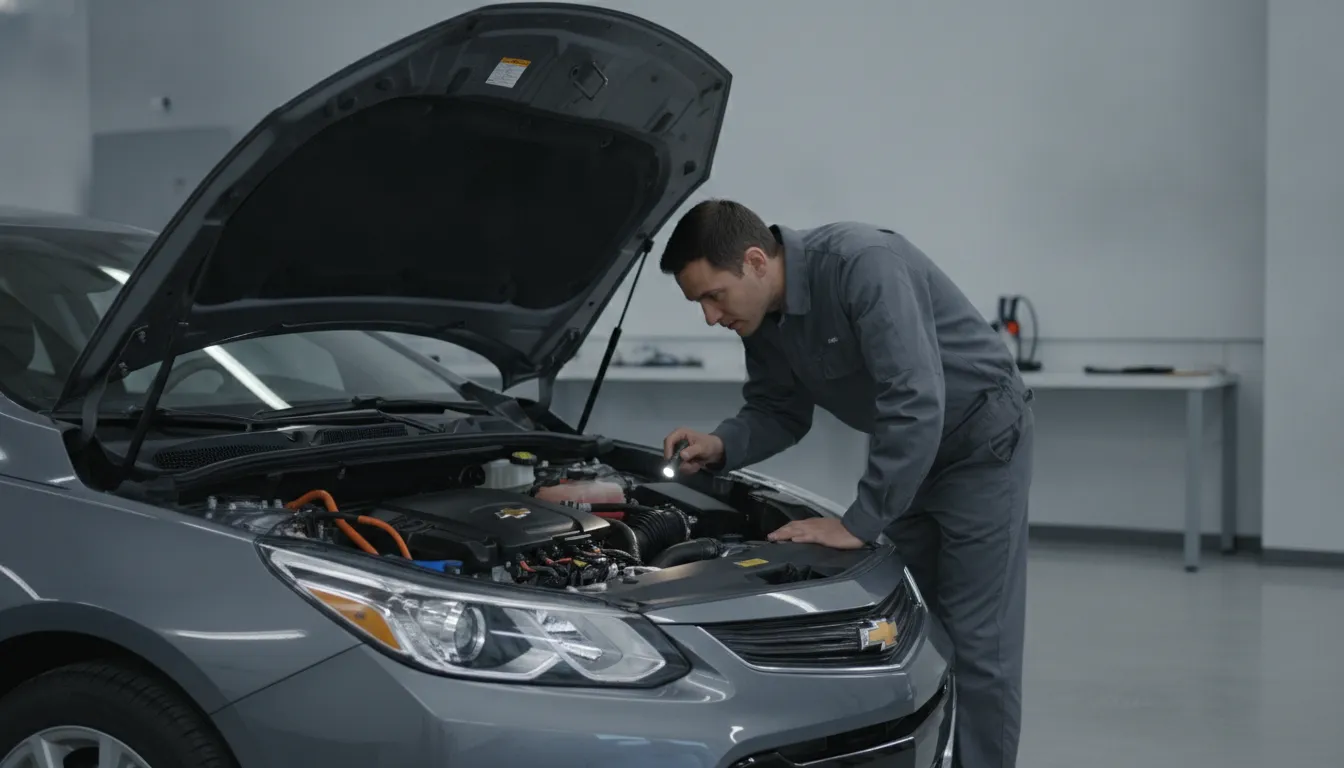
A hybrid inspection should go beyond asking whether the vehicle starts and drives normally. A hybrid electric vehicle combines an internal-combustion engine with one or more electric motors that use energy stored in batteries. So several components work together during acceleration, cruising, and braking. The U.S. Department of Energy explains that regenerative braking captures energy that would otherwise be lost and stores it in the battery. You can learn more about the basic system through the Department of Energy's hybrid vehicle overview.
Start with the exact vehicle configuration
Ask for the complete VIN, model year, model, trim, drivetrain, and engine description. Chevrolet hybrid systems are not interchangeable across every model or year, and the vehicle's owner manual is the best source for model-specific operating and maintenance guidance. Exact identification also helps you confirm which battery, motor, transmission, cooling system, and diagnostic procedures apply to that vehicle.
Do not rely on a general statement such as "the battery is good." Ask what inspection was performed. When it occurred, and whether the paperwork identifies the hybrid battery and related powertrain components. A conventional hybrid does not plug into an external electricity source, but it still depends on its battery, electric motor, engine, and control systems working together. The inspection record should make clear whether the vehicle received a basic mechanical check or a hybrid-system diagnostic review.
Ask about warning lights, prior work, and diagnostic records
Before the test drive, check that the dashboard is free of unexplained warning lights. Ask whether any hybrid-system, battery, engine, braking, or emissions warnings have appeared recently, even if they are no longer illuminated. Also ask whether the vehicle has had battery-related repairs, replacement modules, software updates, cooling-system work, inverter work, or other powertrain repairs. If work was performed, request invoices or service records that show the date, mileage, repairer, and parts involved.
There is no universal hybrid battery lifespan or replacement cost that applies to every used Chevrolet hybrid. Age, mileage, model design, climate, maintenance, and prior use can all affect the evaluation. Treat any broad promise as a reason to ask for vehicle-specific evidence, not as a substitute for diagnostics. A qualified technician can help interpret scan results and identify stored or pending faults that may not be obvious during a short drive.
Confirm coverage before you make a decision
Ask whether any remaining factory coverage applies to the hybrid battery or other high-voltage components, and verify the terms directly. Then ask whether coverage transfers to the next owner, whether a deductible applies, which repairs are excluded, and which facility must perform covered work. Dealer or third-party protection plans can have different levels and contract terms. Auto Fanatics offers multiple vehicle protection plan options through DKP Administration, but eligibility and coverage must be confirmed for the individual vehicle and contract. Review the details at vehicle protection plans before relying on them.
Finally, combine the records with a realistic drive. Notice smooth transitions between engine and electric operation, consistent acceleration, normal braking feel, and any unusual noise or warning message. This checklist is useful whether you are shopping in Fredericksburg, Stafford, Spotsylvania, or another Northern Virginia community.
How Should You Compare Fuel Economy?
Fuel economy is useful when comparing used Chevrolet hybrids, but the number only means something when it belongs to the exact vehicle you are considering. Chevrolet's hybrid lineup has included different models, model years, powertrains, body styles, and trims. A compact sedan and a larger SUV should not be judged by the same expectation, even if both use hybrid technology.
Start with the exact year and trim
Use the EPA fuel-economy label or window sticker for the specific vehicle, then confirm the model year, trim, drivetrain, engine, and transmission. An online search result or a listing for a similar Chevrolet hybrid can provide a research starting point. But it is not a substitute for the vehicle's own documentation. The EPA notes that hybrid systems can vary significantly in design, so the owner's manual is also an important source for model-specific operating guidance.
For example, a CarGurus listing identifies a 2018 Chevrolet Malibu Hybrid with a 46 MPG combined figure. That is a listing-specific figure for that model and year, not a promise for every used Chevrolet hybrid. The same listing page includes multiple Malibu Hybrid model years and mileages. Which reinforces why you should match the fuel-economy information to the VIN, year, trim, and equipment of the car in front of you.
| Factor | Check | Why it matters |
|---|---|---|
| EPA estimate | City, highway, and combined figures for the exact trim. | Creates a consistent baseline. |
| Commute pattern | Local traffic, short trips, highway miles, and speed. | Your route may differ from test conditions. |
| Weather and climate | Cold temperatures, heat, air conditioning, and accessories. | These can change real-world consumption. |
| Driving behavior | Acceleration, braking, tire pressure, and drive modes. | Daily habits affect results. |
Compare the estimate with your real routine
Think about how you drive around Fredericksburg, Stafford, Spotsylvania, Culpeper, Woodbridge, or King George. A vehicle used mostly for short local trips may produce a different result from one used for steady highway commuting. Winter temperatures, cabin heating, air conditioning, and other accessories can also lower fuel economy, with those effects sometimes more noticeable in hybrid vehicles.
During a test drive, observe the fuel-economy display without treating it as a guarantee. Drive normally, including safe stop-and-go traffic and highway merging when practical. Notice how the vehicle accelerates, coasts, and brakes. Regenerative braking can recover energy during gentle or moderate braking, while hard braking relies more on conventional friction brakes. After comparing the exact EPA information with your route, weather, and driving habits, you will have a more useful picture than any generalized MPG claim. For broader shopping context, see this guide to fuel-efficient used cars.
Which Maintenance Records Matter Most?
Maintenance records help you understand how a used hybrid was cared for, not just how it looks on the lot. Start with the exact model year, trim, mileage, and owner manual. Hybrid systems can differ significantly in design and energy management, so the manufacturer's guidance is more useful than a generic service checklist. The U.S. Department of Energy recommends consulting the owner's manual for vehicle-specific operating and maintenance advice.
Look for routine service and wear-item history
Ask whether the seller has records for scheduled maintenance and whether the work was completed at the intervals specified for that vehicle. The documentation may include oil and filter service for the gasoline engine, inspections, fluid service, and other model-specific items. Do not assume that a missing receipt proves the work was skipped, but treat gaps as a reason to ask more questions and consider an independent inspection.
Pay close attention to tires and brakes. Compare the tire brand, size, tread condition, and wear across all four corners. Uneven wear can prompt questions about alignment, suspension, or previous damage. With a hybrid, also ask how the brake system feels during a drive. Regenerative braking uses the electric motor to recover energy, while harder braking relies more on conventional friction brakes. A qualified inspection can help distinguish normal operation from a maintenance concern.
Check cooling, software, and recall documentation
Ask for records related to cooling-system service and any work involving the hybrid battery, electric motor, engine, or associated controls. The right questions depend on the Chevrolet model and year. Look for diagnostic results, warning-light history, and invoices that identify what was inspected or repaired rather than relying on a vague statement that the hybrid system was checked.
Software updates and recall work matter too. Ask whether open recalls were checked using the vehicle identification number and whether completed campaigns are documented. If a record mentions a warning light, hybrid-system fault, battery-related repair, or repeated diagnostic visit, ask for the final resolution and supporting paperwork. Confirm any remaining factory coverage or transferable protection separately, since maintenance records do not establish warranty eligibility by themselves.
Use the history report as one piece of the review
A vehicle-history report can provide useful context. CARFAX says its database may include known accidents, damage, and theft reports. However, a history report is not a substitute for a hands-on inspection. It may not capture every service event, wear issue, or diagnostic concern, so combine it with records, a careful test drive, and an inspection when appropriate.
As you compare ownership priorities, our guide to fuel-efficient used cars offers additional context. At Auto Fanatics in Fredericksburg, shoppers can review available records through a transparent, no-pressure process before deciding whether a vehicle fits their needs.
What Warranty and Protection Questions Should You Ask?
Warranty language can sound reassuring until you ask what it actually covers. A used Chevrolet hybrid may have remaining factory coverage, a separate federal emissions warranty. A dealer or third-party vehicle protection contract, or no applicable coverage for a particular repair. Those are different forms of protection, so review each one for the exact vehicle, model year, trim, mileage, and VIN.
What remains from the factory?
Start by asking which original manufacturer warranties are still active and when they expire. Request the warranty booklet or a written explanation of the remaining terms, then confirm whether coverage follows the vehicle or depends on registration, maintenance records, or another condition. Ask specifically whether the hybrid battery, electric motor, inverter, cooling system, and related control components are addressed separately from the gasoline engine and transmission.
Do not assume that a factory warranty covers every hybrid-system concern. Ask whether diagnostic time is included, which deductibles apply, where covered repairs must be completed, and whether parts must be approved before work begins. Federal emissions warranties can apply to used vehicles, but their terms and covered components are defined by applicable requirements and the vehicle's documentation. The EPA notes that certain major emissions components may have coverage for a specified period or mileage, whichever comes first. Review the actual warranty information instead of treating that rule as a promise of battery coverage: EPA emissions warranty guidance.
What does a protection plan include?
If factory coverage has ended or leaves gaps, ask whether a dealer or third-party contract is available for the vehicle. Auto Fanatics offers multiple vehicle protection plan levels through DKP Administration, but the contract controls what is covered. Review the exact agreement for hybrid-specific components, covered labor, diagnostic fees, exclusions, claim limits, waiting periods, and whether authorization is required before repairs begin. You can review the dealership's vehicle protection plans as part of that conversation.
Ask how a claim starts, who determines whether a failure is covered, and whether the plan transfers if you sell the vehicle. Also ask what paperwork you should keep, including service invoices, inspection results, warranty documents, and prior repair records. A protection plan is not a substitute for evaluating the vehicle's present condition. And it should not replace a careful inspection or a review of warning-light and diagnostic history.
Which questions should be answered before signing?
- Is any factory or emissions coverage still active for this VIN?
- Are hybrid-system components listed by name, and what exclusions apply?
- Are diagnostics, towing, rental transportation, and labor included?
- What maintenance or documentation requirements could affect a claim?
- What is the process and deadline for reporting a problem?
Clear answers help you compare the vehicle and its protection on their actual terms, whether you are shopping near Fredericksburg, Stafford, Spotsylvania, or elsewhere in Northern Virginia.
What Should a Realistic Test Drive Include?
A short loop around the dealership can tell you whether a vehicle feels comfortable, but a realistic test drive should do more. Give the used Chevrolet hybrid time to show how it starts, moves through traffic, brakes, manages the cabin, and communicates warnings. The exact experience will vary by model year and trim, so compare what you feel with the owner's manual and the vehicle's records.
Use a route that reflects your driving
If you are shopping in Fredericksburg, plan a route that resembles your normal week. That might include local streets near US Route 1, stop-and-go traffic, and a safe highway merge when conditions allow. A buyer from Stafford, Spotsylvania, Culpeper, Woodbridge, or King George may have a different mix of local roads and I-95 travel. You do not need to drive aggressively or recreate every commute. You need enough variety to notice whether the vehicle feels predictable and comfortable for your routine.
Follow this test-drive checklist
- Check the startup. Begin with the vehicle cold when possible. Notice whether the start-up sequence appears normal, whether the engine engages smoothly, and whether any warning lights remain illuminated after the initial system check. Ask the seller about anything you do not recognize rather than assuming a light is harmless.
- Drive through city stop-and-go. Use ordinary Fredericksburg traffic and observe low-speed response, transitions between electric assistance and engine operation, steering feel, visibility, and ease of parking. Some hybrid systems use regenerative braking to recover energy that would otherwise be lost during braking, so pay attention to whether the pedal feels consistent. The U.S. Department of Energy explains this function in its hybrid vehicle overview.
- Test acceleration and a highway merge when safe. On an appropriate road, confirm that the vehicle can join traffic at a pace that feels comfortable for you. Follow posted limits, leave room around other vehicles, and skip this step if traffic or weather makes it unsafe. Do not judge the vehicle by a single acceleration event.
- Apply the brakes normally. Try gentle and moderate stops first, then one firm stop only where it is safe and legal. Look for pulling, vibration, unusual sounds, or a pedal that feels inconsistent. Smooth braking matters more than trying to prove a performance limit.
- Use the climate controls. Run the heat or air conditioning at a normal setting and check how quickly the cabin becomes comfortable. Accessories such as heating and air conditioning can affect fuel economy, with a potentially greater effect on hybrids, according to FuelEconomy.gov.
- Evaluate cabin comfort. Check seating position, rear-seat space, sight lines, noise, cargo access, and the controls you will use every day. A vehicle that is efficient on paper still needs to fit your passengers, child seats, work equipment, or weekend plans.
- Review warning lights and the drive afterward. At the end, walk around the vehicle, note any new alerts or unusual odors, and ask to review diagnostic information and service records. Discuss anything that felt different from expectations before making a decision.
Auto Fanatics uses a no-pressure process, so you should have time to ask questions and review the vehicle's condition. A careful test drive is one part of that evaluation, alongside the inspection, history report, maintenance records, and model-specific hybrid documentation.
Are Used Chevrolet Hybrids a Good Fit for Fredericksburg Drivers?
Used Chevrolet hybrids can make sense for some drivers in Fredericksburg and nearby Northern Virginia communities. But the right choice depends on how you drive and what you need from the vehicle. A short daily commute, frequent stop-and-go traffic, fuel-saving goals, and a preference for a conventional refueling routine may all support considering a hybrid. However, the exact Chevrolet model, model year, trim, condition, and documented service history matter more than the badge alone.
Match the vehicle to your daily routine
Start with your normal week. Do you spend most of your time in Fredericksburg traffic, or do you regularly travel longer distances from Stafford, Spotsylvania, Culpeper, Woodbridge, or King George? A hybrid system can be useful in city driving because some systems recover energy during braking. And certain full hybrids can use electric power for short distances and at low speeds. The U.S. Department of Energy explains that regenerative braking captures energy that would otherwise be lost and stores it in the battery. Read the details for the specific vehicle before assuming how its system will behave.
Consider seating and cargo as carefully as fuel goals. A sedan may work well for commuting and errands, while an SUV or larger vehicle may better suit a growing family, bulky equipment, or frequent trips with passengers. Check rear-seat space, trunk or cargo-floor design, child-seat fit, and visibility in person. If you need to carry more, compare the actual interior layout rather than choosing a model based only on its estimated fuel economy.
Account for weather, roads, and comfort
Virginia weather changes throughout the year, so evaluate comfort and confidence in conditions you actually encounter. During a realistic test drive, use the climate controls, listen for unusual noises, watch for warning lights, and pay attention to braking feel. Try representative city streets and, when safe, highway merging near I-95. A vehicle that feels efficient on paper still needs to feel comfortable and predictable for your commute.
Ask for the exact vehicle history, maintenance records, model-specific hybrid documentation, and any remaining or transferable coverage. Do not assume that every used Chevrolet hybrid has the same battery design, performance, or protection. Auto Fanatics uses a transparent, no-pressure process so you can review those details before making a decision. The dealership also has more than 500 five-star reviews, which you can explore in its customer testimonials.
Frequently Asked Questions
What is the best used Chevrolet hybrid to buy?
There is no single best choice for every driver. Compare the exact Chevrolet model, model year, trim, mileage, battery documentation, service history, available coverage, and your driving needs. A hybrid that fits stop-and-go commuting in Fredericksburg may not be the right fit for a driver who regularly carries passengers or spends long hours on I-95.
How can you check a used Chevrolet hybrid battery?
Ask for model-specific service records and any available hybrid-system diagnostic documentation. During the test drive, watch for warning lights, unusual operating behavior, or inconsistent performance. An independent inspection can provide another layer of confidence, but do not assume that a routine vehicle history report proves battery condition.
Does Chevrolet still make hybrid vehicles?
Chevrolet hybrid availability depends on the model and model year, so verify the vehicle's powertrain from its VIN, window sticker, owner's materials, and service records. Used inventory can include older or discontinued configurations, making exact-year research more useful than relying on a general list of current Chevrolet vehicles.
What warranty questions should you ask before buying?
Ask whether any original factory coverage remains, whether it transfers to you, and which hybrid components are included. If a vehicle protection plan is available, review the contract's covered parts, exclusions, deductible, claim process, and term. Coverage varies by vehicle and contract, so get the details in writing before making a decision.
Ready to Browse Used Chevrolet Hybrids?
Once you have reviewed battery health, records, coverage, fuel economy, and test-drive needs, you can compare available vehicles with a clearer plan. Auto Fanatics offers a transparent, no-pressure way to explore used inventory in Fredericksburg and ask practical questions before deciding.
Browse Auto Fanatics used inventory and compare available vehicles with a no-pressure team.
Tips for composing a new page
Overfuel's intuitive content editor makes it easy to build beautiful, professional-looking content in minutes:
- Choose from one of our pre-built templates or build a page from scratch
- Drag and drop content blocks from the toolbox on the right
- Add imagery, videos, or featured inventory to engage customers.
- Drop in seamlessly integrated lead generation tools including contact forms, instant trade-in offers, credit applications, and more.
Inventory Blocks
Easily create inventory pages on the fly to feature specific makes, models, price ranges, or vehicle types like trucks, coupes, etc.
Custom Forms
Create and manage your own lead generation forms to run special promotions and capture your own leads.
Reusable Content Blocks
Never reinvent the wheel–set up your staff directory, FAQs, and customer reviews once and simply drag a Block in for reuse
Calls to Action (CTAs)
Drop in and customize buttons to open popular calls to action like trade-in appraisals, finance applications, and more.
And more!
If we're missing a feature you'd like to see, we're all ears! Contact your Overfuel customer success manager to put in a request for our development team.